Beyond the Lights: Unveiling the True Spiritual Essence of Diwali
Festivals play a vital role in preserving a nation’s culture and traditions. Some festivals emerge as symbols of regional prominence, while others are designed to awaken the entire nation. Diwali falls in this latter category.
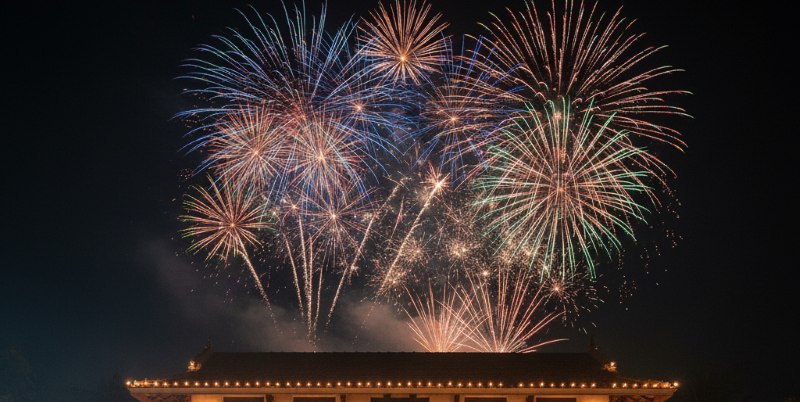
In today’s world, where modernity overshadows the inner meaning, Diwali has been reduced to a festival of merely bursting firecrackers. In reality, the festival of Diwali holds numerous spiritual, social, and scientific secrets. It also carries a rich historical background. Diwali is a festival celebrated by the entire nation, transcending sect and religious differences.
When we think of the festival of Diwali, the story of Lord Krishna slaying Narakasura immediately comes to mind. Along with this, there are many other historical events that form the basis of Diwali’s significance. It is believed that Diwali marks the day Lord Rama returned to Ayodhya and met Bharata after slaying the demon king Ravana.
On Diwali day, Lord Vamana is said to have banished the demon king Bali to the netherworld (Patala). The Vikramarka Era (Vikram Samvat) also began on a Diwali day.
Furthermore, the great spiritual master Vardhamana Mahavira attained enlightenment (moksha) on Diwali.

In our country, which is a hub of diverse cultures and traditions, the festival of Diwali is celebrated with many variations. They are as follows:
5 Day Festival
In North India, Diwali is celebrated as a five-day festival:
- Dhanatrayodashi (Dhanteras),
- Naraka Chaturdashi Diwali (Main Diwali Day),
- Bali Padyami (Govardhan Puja/Annakut),
- Yama Dwitiya (Bhai Dooj).
In South India, Diwali is celebrated to commemorate the slaying of Narakasura, whereas in North India, it is observed as a remembrance of Ravana’s defeat. In Gujarat, new business ventures are initiated on Diwali day.
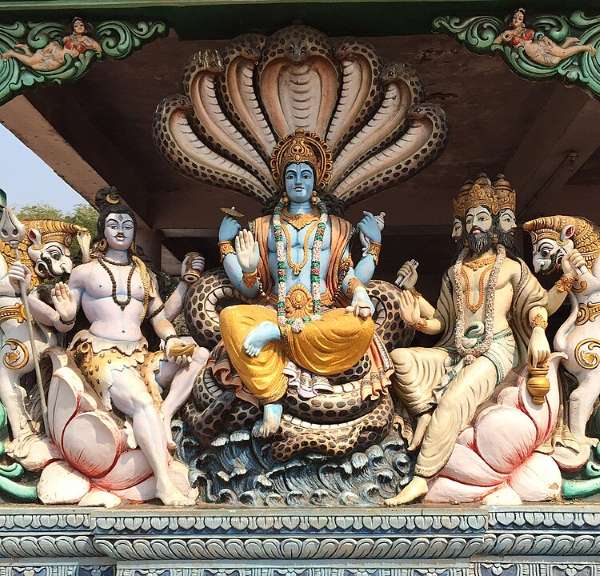
In Madhya Pradesh, Diwali is celebrated to mark the day Lord Vishnu, the consort of Goddess Mahalakshmi, came to the earthly realm. In Kolkata, Goddess Kali is worshipped on Diwali day.
Dipam jyoti parabrahma dipam sarvatamopaham
Dipena sadhyate sarvam sandhyadipam namostutee
The lamp is the light of Parabrahma. The lamp is all-pervading. The lamp is all-pervading. I bow to the lamp of all-pervading darkness.
The very name Diwali itself reflects the importance of lamps (dipas). Lighting lamps and decorating the entire house is only the outward expression of the festival, but hidden within it lies a profound spiritual dimension. Among the five elements (Pancha Bhutas), fire (Agni) is of prime importance. This fire provides vital energy for the survival of all living beings, offers food in the material sense, knowledge and righteousness in the worldly sense, and spiritual fulfilment in the higher sense.

3 Colours of the Lamp
When a lamp is lit, its flame predominantly displays three colours: blue, yellow, and white. These three colours symbolise the three gunas that govern human life: Sattva, Rajas, and Tamas. These three colours also represent the Tri-Devis—Lakshmi, Saraswati, and Durga. In their spiritual essence, they correspond to the supreme ideals of Satyam (Truth), Shivam (Auspiciousness), and Sundaram (Beauty). These three ideals, in turn, bestow knowledge, wisdom, and humility upon human beings.
Diwali – Traditions
Today, Diwali is commonly associated only with taking an oil bath, wearing new clothes, and bursting firecrackers. However, many traditional practices are meant to be observed on this day, most of which have faded with time. Let us recall them once and try to bring them back into practice.
Scriptures state that Goddess Lakshmi resides in oil and Goddess Ganga resides in water. Therefore, on Naraka Chaturdashi day, one should wake up before sunrise and take an oil bath with sesame oil. Afterwards, a lamp with four wicks should be offered to Narakasura. In the evening, lamp worship (Deepa Aradhana) should be performed in temples.
Lamp Worship – Rituals and Practices
According to the Dharmashastras, lamps should be lit and Yama Tarpana (offerings to the god of death, Yama) should be performed on Chaturdashi day. This ritual is mentioned in the Hemadri Grantha as Kaumudi Deepotsava. The text also describes the procedure for offering lamps (Deepa Dana).
The Mudrarakshasa text also contains detailed procedures for lamp offerings, indicating that people in those times celebrated the Kaumudi Mahotsava. In ancient times, it was customary to invite daughters and sons-in-law home for Diwali. As evidence, the classic “Nagananda” describes King Vishvavasu performing many rituals and honours for his daughter, Malayavati and her husband during Diwali.
During the Vijayanagara dynasty, historical records indicate that Diwali was celebrated with great enthusiasm. The famous Arab traveller Al-Biruni, who visited India in the 11th century CE, extensively described in his writings how grandly Diwali was celebrated in India.
Diwali – A Spiritual Awakening
The true splendour of Diwali comes from the lamps. Nowadays, lamps are lit mainly as a prelude to bursting firecrackers, but lamp worship (Deepa Aradhana) is actually a symbol of profound spiritual practice, as described in many scriptures.
Some of the key points are:
Lighting a lamp dispels untimely death (Apamrityu). Offering lamps on Amavasya (New Moon) and Chaturdashi is believed to remove the afflictions caused by Yama, the god of death. Lighting a lamp signifies the awakening of knowledge. The inner meaning of lamp worship is to dispel the darkness of ignorance around us and invite the light of wisdom.
From a social and scientific perspective, Diwali occurs during a season of high humidity. Due to the rains, the breeding of insects and pests is at its peak. The smoke from Diwali firecrackers helps eliminate these insects, and the noise from some crackers drives away harmful creatures that pose a threat to humans. The day following Diwali is celebrated as Bhagini Hasta Bhojana (Bhai Dooj).
On this day, brothers visit their sisters’ homes to have a meal together. This tradition strengthens and preserves the bond between siblings for life. On Diwali day, one should bathe at sunrise, wear new clothes, and in some regions, there is also a custom of adding mango, fig, and Indian blackberry (jamun) leaves to the bathwater.
Depending on one’s capacity, charity in the form of food donation (Annadana) should be performed, and in the evening, lamp worship and lamp offerings in temples should be carried out. In some regions, there is a tradition of constructing wooden structures in the shape of trees and lighting lamps on them, which are called Deepa Vrikshas (Lamp Trees).
In other places, lamps are lit in leaf cups and set afloat in rivers, and in temples, tall brass lamps are lit. In certain regions, on Diwali evening, women hold brooms and beat a leather drum (tappeta), symbolically driving away Goddess Jyestha (the elder sister of Goddess Lakshmi, considered the deity of poverty) from the house. After this ritual, the house is swept, decorated with rangoli and adorned beautifully.
According to household tradition, Goddess Lakshmi should be worshipped on Diwali. During Pradosha time (evening twilight), lamp worship and a formal Lakshmi Puja are performed, followed by sharing sweets with family and friends. After the puja, lamps are lit throughout the house. In this way, Diwali, filled with diverse customs and traditions, spreads the light of joy across the world. This is the grandeur of Indian festivals, a radiance of the Sanatana culture that seeks the welfare of all humanity. In the light of a lamp, red, blue, and white colors can be seen. These three colours are symbols of the Trimurtis—Brahma, Vishnu, and Maheshwara (Shiva).
Lamps are symbols of prosperity. They not only dispel darkness and show the way, but also, a lamp lit with sesame oil is beneficial to nature. According to scriptures, lamps should be lit twice a day in temples and homes. In the worship of Goddess Mahalakshmi, lighting the lamp is of supreme importance because the lamp itself is the embodiment of the Supreme Brahman (Parabrahma).
The lamps lit on Diwali remove the darkness of suffering and bring the light of happiness. Therefore, on Diwali, Lamp-Lakshmi (Deepa Lakshmi) must be worshipped with ghee lamps. In a home where a lamp is lit daily, Goddess Mahalakshmi resides permanently, bestowing peace and prosperity.
Navagrahas and Light
The lamp we light is also a symbol of the five elements (Pancha Bhutas) and the nine planets (Nava Grahas). The lamp, as the embodiment of Goddess Mahalakshmi, bestows wealth and the eight types of prosperity (Ashta Aishwaryas) upon us.
- The wick of the lamp represents the Sun (Surya).
- The oil we pour into the lamp symbolises the Moon (Chandra).
- The flame of the lamp signifies Mars (Kuja).
- The yellow hue in the flame denotes Jupiter (Guru).
- The shadow cast by the burning lamp represents Rahu.
- The rays of light emitted by the lamp correspond to Venus (Shukra).
- The spiritual merit (punya) and liberation (moksha) we gain from lighting the lamp are associated with Ketu.
- Finally, when the lamp’s wick turns black after burning, it symbolises Saturn (Shani).
Hence, scriptures of remedial rituals (Parihara Shastra) state that a household where lamps are lit daily will remain free from the maleficent effects of the nine planets. Thus, a lamp lit in harmony with the Pancha Bhutas and Nava Grahas becomes a source of auspiciousness and well-being.