The Proshthapadi Bhagavata: An Annotated Edition and Critical Study
Among the various spiritual and cultural traditions of India, the Proshthapadi Bhagavata holds a unique place, especially in the devotional landscape of Karnataka and other southern regions. It is a part of the Madhva tradition.
Rooted in the Bhagavata Purana, this tradition emphasises the public recitation and discourse of the Purana during the month of Bhadrapada (Proshthapada), often culminating in deep religious engagement, community participation, and spiritual reflection.
The word “Proshthapadi” refers to the lunar month of Bhadrapada, and this period is considered especially sacred for reading and listening to the Bhagavata Purana, one of the eighteen Mahapuranas composed by Sage Vyasa. The Bhagavata, particularly the Tenth Skandha (Canto), narrates the life and leelas (divine plays) of Lord Krishna, making it a central text in the Vaishnavite tradition.
12 Skandhas
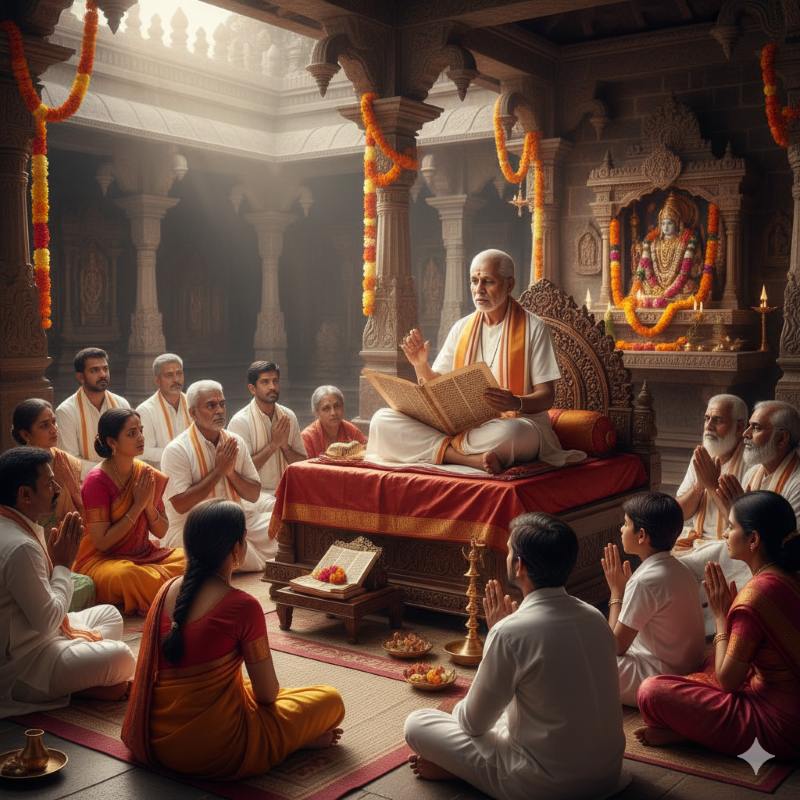
In the Proshthapadi Bhagavata tradition, scholars, Harikatha artists, or spiritual teachers undertake the systematic reading or exposition (pravachana) of all twelve Skandhas of the Bhagavata over a period of seven, ten, or fifteen days. This recitation is usually organised in mathas (monastic institutions), temples, or even public halls and private residences, drawing devotees of all ages.
Historically, this tradition became popular through the influence of Haridasa saints and Acharyas, especially in Karnataka. Saints like Sri Purandara Dasa, Kanaka Dasa, and Vyasaraja promoted the values of the Bhagavata through devotional compositions that resonated with common people.
Their efforts helped the Proshthapadi Bhagavata evolve as not just a ritual reading, but a transformative spiritual-cultural movement emphasising bhakti (devotion), jnana (spiritual knowledge), and vairagya (detachment).
One of the special aspects of the Proshthapadi observance is its collective nature. The sessions often include bhajans, namasankirtana, and philosophical discussions. For many, it becomes a time of introspection, moral refinement, and reconnecting with the divine essence of Krishna. The listeners are encouraged to practice satsang (company of the virtuous), absorb the dharma embedded in stories, and cultivate love and surrender toward the Supreme.
The Bhagavata Purana’s style is poetic and rich in metaphor, and its messages are deeply layered, covering theology, cosmology, ethics, and aesthetics. The Proshthapadi recitation, especially when performed with sincerity and faith, serves as a means of purifying the mind, reminding listeners of the impermanence of worldly life and the supreme goal of spiritual liberation (moksha). In contemporary times, the Proshthapadi Bhagavata continues to thrive with renewed interest.
Spiritual institutions and cultural organisations host Bhagavata Saptahas (week-long recitations) with erudite scholars and musical accompaniment, keeping the age-old tradition alive and accessible to modern audiences.
Final Word
In conclusion, the Proshthapadi Bhagavata is not merely a religious event; it is a spiritual journey, a communal celebration of divine stories, and a time-honored practice that fosters devotion, wisdom, and inner transformation through the timeless teachings of the Bhagavata Purana.