Sri Hasanamba Devi Temple
Through the length and breadth of India, there are thousands of temples for Hindus to worship and get enlightenment of the divine power that reigns over their destiny. Almost all the temples are kept open every day throughout the year, with specific times of opening and closure of the sannidhis.
But there are a few exceptional temples where this common rule of keeping the temple open throughout the year does not apply. For reasons based on the agamas and local practices, these temples are opened for a few days or weeks in a year for the darshan of the devotees.
The Temple that Opens for the Devotees for Diwali Only
Temples open on specified days
Some temples in our country open on specified days.
- Kottiyur ‘Sri Mahadeva’ temple in Kerala opens for about 28 days only during Vaisakha Mahotsavam between May and June in a year.
- In another Kerala temple where the main deity Shiva faces east and goddess Parvathi faces the west, the sannidhi of Sri Parvathi Devi is kept closed throughout the year except for 12 days during the annual Thiruvathira (Ardhra) festival in the month of Dhanus (December-January).
- Similarly, Tungnath Temple and Madmaheshwar Temple in the Himalayas are open for a specific number of months in a year.
Sri Hasanamba Devi in Hassan district of Karnataka is one such exceptional temple. This temple is kept open for about a week or a few more days during the Diwali festival every year. The legends and history behind this temple of Devi Hasanamba are exciting, filled with the devotion and faith of not only the local people but the people of the whole state.
Belief
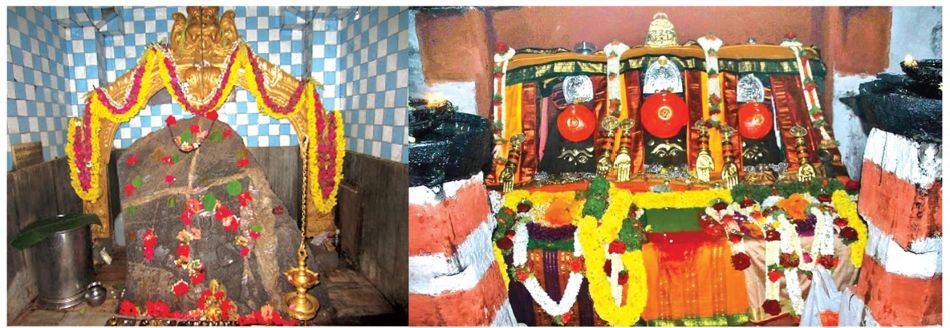
It is believed that when the doors of the sanctum of Sri Hasanamba Devi are about to be closed after the Diwali worship, the priests place in front of the Devi a fresh ghee-lit lamp, flowers, water and two bags of rice. Until the doors are again opened the next year for worship, it is believed that the lamp burns with the ghee never exhausting, the rice unspoiled, and the flowers remaining fresh.
History
Hassan district is believed to be under the reign of Mourya kings in the third century BC, and later it was ruled by the Kadambas, Chalukyas, Gangas, Hoysalas and Vijayanagar kings. This district is well-known for the temple architecture, sculptural mastery and genius of the Hoysala kings. Hassan reached the pinnacle of its glory during the supremacy of the Hoysala rule from the 10th to 14th centuries, when Dwarasamudra, now popularly known as Halebeedu in Beluru Taluk, was the capital of the kingdom.
The unique style and intricacies of the master craftsmen of the Hoysala kingdom were amply reflected in the temples of Sri Chennakeshav Perumal in Beluru and Sri Hoysaleswara Shiva temple of Halebeedu. They are adored as the sculptural treasure troves of the Hoysalas, who ruled over the present-day Karnataka, and parts of Tamil Nadu and Andhra. It is said that during the rule of the Hoysala dynasty in the twelfth century A.D., an idol was found with a smiling face.
Hasana Mukhi, or a smiling face, was transformed into Hassan. Hassan is named after the presiding deity, Sri Hasanamba Devi, who sports an everlasting smile on her lips. The name means “smiling mother”. She is happy to see her devotees and bless them.
Sri Hasanamba Devi is worshipped here with equal devotion and dedication witnessed in similar important Devi kshetras like Madurai Meenakshi, Kanchipuram Kamakshi, Kasi Visalakshki, Tuljapur Bhavani, Sringeri Sarada, Mangaluru Mangala Devi, Kerala Baghavathi and Bengal Durga Devi.
The main tower at Sri Hasanamba Devi has been newly constructed in Dravidian style with five tiers. There are three major temples on the premises of this temple dedicated to Darbar Ganapati, Hasanamba and Siddeshwara. Another prominent attraction here is the shrine dedicated to ‘Kallappa’.
The three idols installed here are said to be of the three thieves, who had allegedly come to steal the idol of the presiding deity, Sri Hasanamba Devi, and earned her wrath.
The special feature of this temple is that the lamp lit this year will keep burning till the temple is reopened the next year. Even the flowers retain their freshness for the entire year. Devotees from across South India and Maharashtra visit the temple during Diwali celebrations.

Temple Legend
A traditional story is told by the local people about the origin of this temple. When the Saptamatrikas Brahmi, Vaishnavi, Maheshwari, Kaumari, Varahi, Indrani and Chamunda who are considered sisters, were travelling towards the south from the holy city of Varanasi (Kashi), they happened to see this place of which they were enamoured because of its serene and beautiful environment and decided to settle there.
Of the seven matrikas, Maheshwari, Kaumari and Vaishnavi settled in the three anthills inside the Hassan shrine, while Indrani, Varahi and Chamundi chose the three wells in Devigere Honda. Brahmi, the seventh one, settled in a forest near Kenchammana Hosakote in Alur taluk. Here, Brahmi, called Kenchamba, is considered to have defeated the asura called Raktha Beeja in a fierce battle.
Another legend points out that the place was named Hassan, which is a contraction of Simhasanapuram, associated with Janamejaya, the great-grandson of Arjuna. It is said that the king resided here during the period of his curse by the celestial dog Sarama, whose son was ill-treated by the king and his brothers.
The temple is believed to have been constructed in the 12th century CE during the reign of the Hoysala dynasty. In the temple, the devotees worship Siddeshwara Swamy, whose representation is unusual as it is not depicted in the Linga roopa but is worshipped as Shiva offering the boon of Pasupatastra to Arjuna.
There is an anthill representing the presiding deity inside the temple premises. There is an unusual image depicting the demon-king Ravana with nine heads instead of 10, playing veena.
Hasanamba Devi Temple opening
All the subsidiary shrines— Sri Veerabadra swami, Sri Siddheswara Swami, Dharbar Gnapathi, except the Hasanamba Devi temple, are open throughout the year for worship. This is considered the annual festival of the temple.
During this period, the priests light a ceremonial ghee lamp called Nanda Deepam, which the devotees believe keeps burning throughout the year when the temple is closed after Diwali. The temple gopuram and the premises are decorated with lights during these days. On Deepavali night, an impressive procession moves through the main streets of the city and ends early morning at the temple.

There is an established practice that the sannidhi of Sri Hasanamba should be opened on the first Thursday of Ashwayuja month and closed on the next day called Bali Padyami. Incidentally, Bali Padayami, which is the first thithi (prathamai) after Diwali has its own merit of being a significant day, when Bali Chakravarthi who was sent to Sutala loka, (one of the seven patala lokas considered a prosperous region far superior to Devaloka).
Devotees observe this day as an auspicious one. This legend has a parallel in Kerala where people believed that Bali visits the earth on Onam festival day, which is celebrated elaborately.
Temple Opening 2025
This year, Sri Hasanamba temple will open for darshan from October 9th to October 23rd.
On 9th and 24th the devotees are not allowed for darshan.
On the other days darshan is allowed from 6.00 am to 1.00 pm and again from 3.00 pm to 10.30 pm. Last year, about 20 lakh devotees visited the temple and that number has been increasing year after year.
How to reach the temple
Click here for the temple location on Google Maps
Sri Hasanamba Devi temple is situated in the centre of Hassan city, the capital of the district of Hassan. Hassan is well connected to Bengaluru, Mysore, Mangalore, Madikeri and Chikmagalore. It is around 187 km from Bangalore and 115 km from Mysore. One can get frequent buses to Hassan from these cities/ towns.