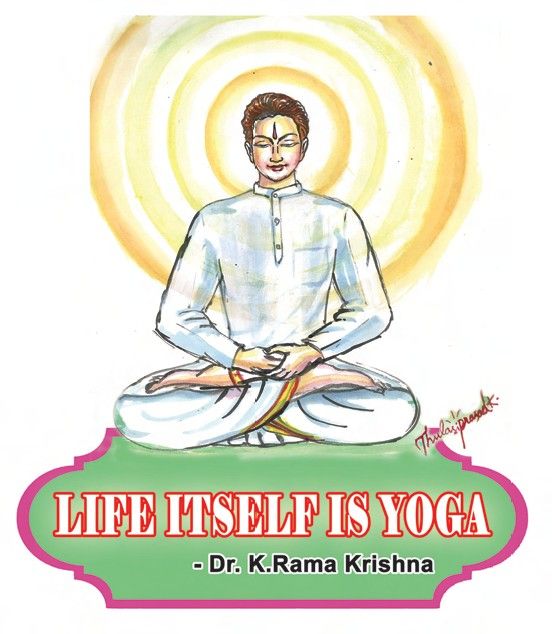
The Yoga of Life: Finding Mindfulness in Everyday
Practising yoga is not just about holding one’s breath and performing penance. There is no need to leave home and retreat into the forests to perform yoga. It does not require renouncing everything like an ascetic. Practising yoga is not merely about straining the body with exercises, nor is it simply twisting the body into various postures.
‘Yoga’ is a disciplinary method and a spiritual path that leads a person to the highest state one can attain in life. Yoga encourages a person to move towards the ultimate goal. It brings stability to the mind. It shapes one’s conduct at every step in life, guiding one to reach one’s life purpose in a precise and meaningful way.
Through yogic practice, a person’s spiritual energy is rejuvenated. The mind comes under control. When the brain functions harmoniously and with inspiration, thoughts remain within limits.
Over time, a practitioner of yoga experiences a kind of transformation in a person’s mental activities, becoming more active and developing an optimistic outlook. This change inevitably reflects on his way of life. The word Yoga originates from the Sanskrit root Yuj, which means union or joining. According to etymology, phrases like ”Yujyate etad iti Yogah” and ”Yujyate anena iti Yogah” imply that yoga refers to gaining control over the senses and focusing the mind on the Divine.
Yoga can also mean spiritual practice or good fortune. Overall, it can be described as a disciplined system of practice that helps individuals cultivate a structured and harmonious way of life.
Yoga in Daily Life
From medical science to advanced scientific research, yoga has been universally recognised for its innumerable benefits. It is a holistic way of living. It consists of various practices along with Pranayama that help in maintaining physical health through different techniques. Therefore, it is not just about performing postures or ‘asanas.’
It is a revolution in a person’s life, transforming an idle or negligent individual into a disciplined one, helping to bring order from a previously chaotic lifestyle. From waking up in the morning to going to bed at night, including dietary habits, yoga helps in achieving balance in all aspects of life. A human being possesses various mental energies, each functioning in different ways and aspects.
Practising yoga primarily focuses on uniting these extraordinary energies by bringing them into a state of harmony and ultimately merging the soul with the Supreme.
The Paths of Yoga
In our daily activities, practising yoga is inherently present in everything we do. However, we must recognise the path of yoga and its purpose within our actions. For this, we need to shift our perspective toward the path of yoga. When we do so, life itself becomes yoga.
Karma Yoga
In daily life, one must perform one’s actions with a yogic perspective. Instead of working merely out of obligation, one should view one’s actions as duties with pleasure. Then only one can see the divine in the work one does. Ultimately, ‘karma’ transforms into yoga, which can be considered a symbol of devotion to the Divine. While performing one’s duties, one must keep the mind focused on the Divine.
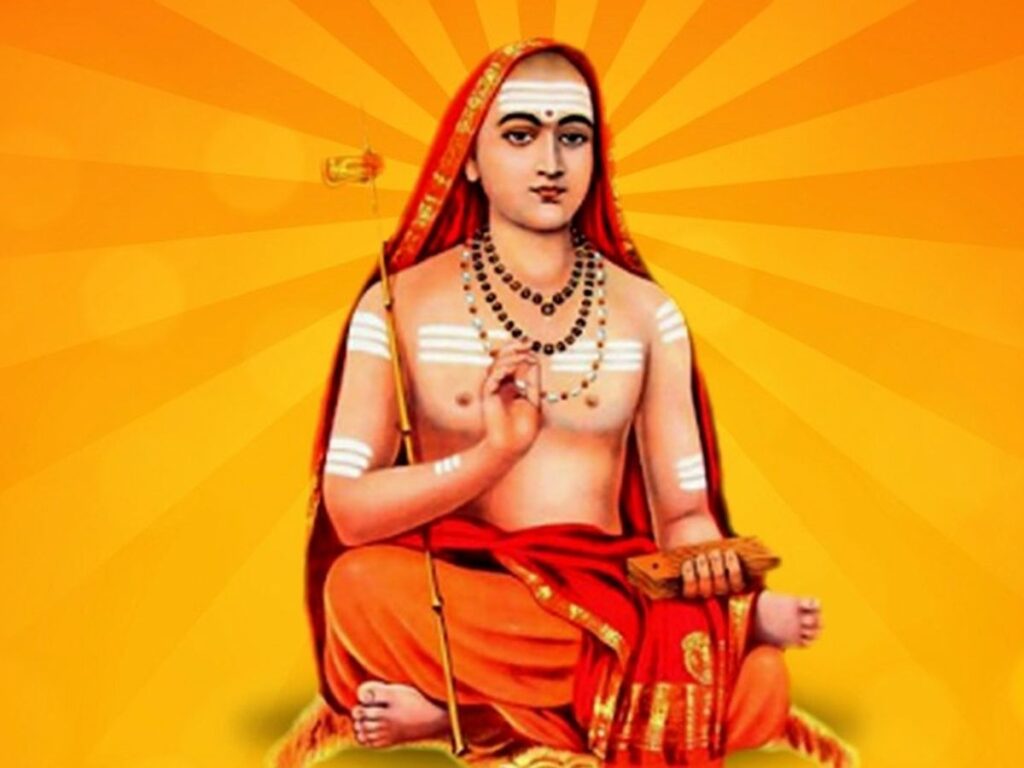
As Jagadguru Adi Shankaracharya said, ”Yadyat karma karomi tattadakhilam shambho tava aradhanam” which means that every action is equivalent to worshipping Lord Shiva. The Gita clearly states that a true ‘karma yogi,’ though engaged in numerous activities, remains unaffected by their results. A householder who practices ‘karma yoga’ is considered superior to a renunciant who contemplates sensual pleasures. Therefore, if one can perceive the divine in every action, there is no greater practice of yoga than this.
Anna Yoga
Seeing the Divine in food itself is called Anna Yoga. The Vedas also describe food as the manifestation of the Supreme (Parabrahma). The Rig Veda and the Yajur Veda specifically contain hymns dedicated to food (Anna Suktam). The Gita also emphasises the significance of food, stating: ”Annaad bhavanti bhootani, parjanyaad anna sambhavah.”
All living beings are sustained by food, and food originates from rain. Merely eating for the sake of it or indulging in excessive cravings for food is not the right approach. The food one consumes shapes one’s divine thoughts and consciousness. Food has another powerful quality. It reflects the emotions one holds while consuming it. The Scriptures state that one attains Anna Yoga by offering food generously to guests, relatives, the hungry, gurus, devotees, and scholars, ensuring they are well-fed and satisfied.
Shuchitva Yoga (The Yoga of Purity)
Purity (Shuchitva) is the first step in the practice of yoga. Scriptures clearly state that where there is no cleanliness, there is no presence of the Divine, as cleanliness is next to godliness. Physical cleanliness is achieved through daily cleansing rituals such as bathing, while mental purity is attained by eliminating negative traits like envy, animosity and malice. The Gita declares that ‘purity itself is knowledge and recognises cleanliness as a divine quality.

Ancient scriptures have emphasised Shuchitva, describing it as Matraroopena (in the form of a mother). The Rig Veda and the Skanda Upanishad extensively discuss the importance of purity. Sri Suktam states: ”Yah shuchih prayato bhootva juhuyaadajyamanvaham”— where purity does exist, there Goddess Lakshmi resides. In essence, purity is yoga. One must understand that purity is the foundation for practising yoga.
Sneha Yoga (The Yoga of Friendship)
The Scriptures, including the Puranas and Itihasas, declare that there is no greater Dharma in creation than the principle of true friendship. Friendship should not be treated as mere pastime but as the foundation for righteous conduct. Forming bonds with virtuous individuals is also a form of yoga. Attaining such Sneha Yoga is one of the greatest paths to liberation (Moksha).
During the exile, Lord Rama made friends with Sugriva. Sugriva expressed his gratitude by saying, ”Rama! Because of your friendship, I have now become worthy of even divine blessings.” This shows that friendship with noble individuals attracts divine grace.
On the other hand, Karna, despite being a mighty warrior, was led astray due to his friendship with Duryodhana, who had an evil nature. Forming bonds with the righteous and being a true friend to all is also a part of Yoga Sadhana.
Vaak Yoga (The Yoga of Speech)
Among the qualities that define a human being, speech (Vaak) is one of the most significant. A single word has the power to establish a person as noble in society or to label him as wicked. The Vedas extensively proclaim the immense power of speech.
During King Janamejaya’s Sarpa Yajna (serpent sacrifice), the moment the sages uttered, ”Sa Mahendra Takshakaaya Swaaha,” even Lord Indra, seated on his throne in heaven, was pulled down to the earth along with Takshaka. Such is the power of words. They can do wonders. They can move the gods from their places.
Maharishi Valmiki describes Lord Rama’s mastery of speech, stating: ”Smita-bhaashi hitabhaashi poorva-bhaashi cha Raaghava.” Lord Rama always spoke with a smile, in a pleasant and meaningful manner, and He initiated conversations before others did. Because of this, Lord Rama had only friends and never enemies.
With such powerful speech, we too have the opportunity to elevate our words as a step toward Yoga Sadhana. The right speech leads to the self-restraint (Jitendriyatva) nature which Lord Krishna in the Gita refers to as Vachika Tapas (the austerity of speech). It is our responsibility to practice this austerity and transform it into Vaak Yoga.
Final Word
Yoga should not remain merely a philosophical teaching. Let us transform yoga into our way of life. Then only one will get the yogic bodies envisioned by Maharishi Patanjali.