Magha Masam
Magha Masam holds a very special place in Sanatana Dharma and is regarded as one of the most sacred months in the Hindu calendar. Scriptures extol this month as highly auspicious for spiritual practices, charity, and important samskaras, especially marriage (kalyanam).
The eleventh month in the Hindu calendar is Magha. It is considered a pious month for taking holy baths in rivers and seas. During Magha Masam, Lord Vishnu is offered prayers with devotion and reverence.
According to the Padma Purana and Skanda Purana, observances performed during Magha Masam yield manifold spiritual merit. The Padma Purana states, “Maghe snanam prakurvita makarastho divakare”, meaning that when the Sun is in Makara Rashi, a sacred bath during Magha Masam bestows great spiritual benefits. Since marriage is a sacred samskara aimed at dharma, artha, kama, and ultimately moksha, this month is considered ideal for beginning married life with divine blessings
It is believed that Maa Parvati Mata had incarnated as Sati during this month. Once Parameswari adorned a south-facing conch and was resting on a lotus flower in the river Sarayu. Daksha, while taking a holy bath in the river saw the flower and plucked it. When he touched the conch, it turned into a beautiful girl named ‘Sati Devi’.
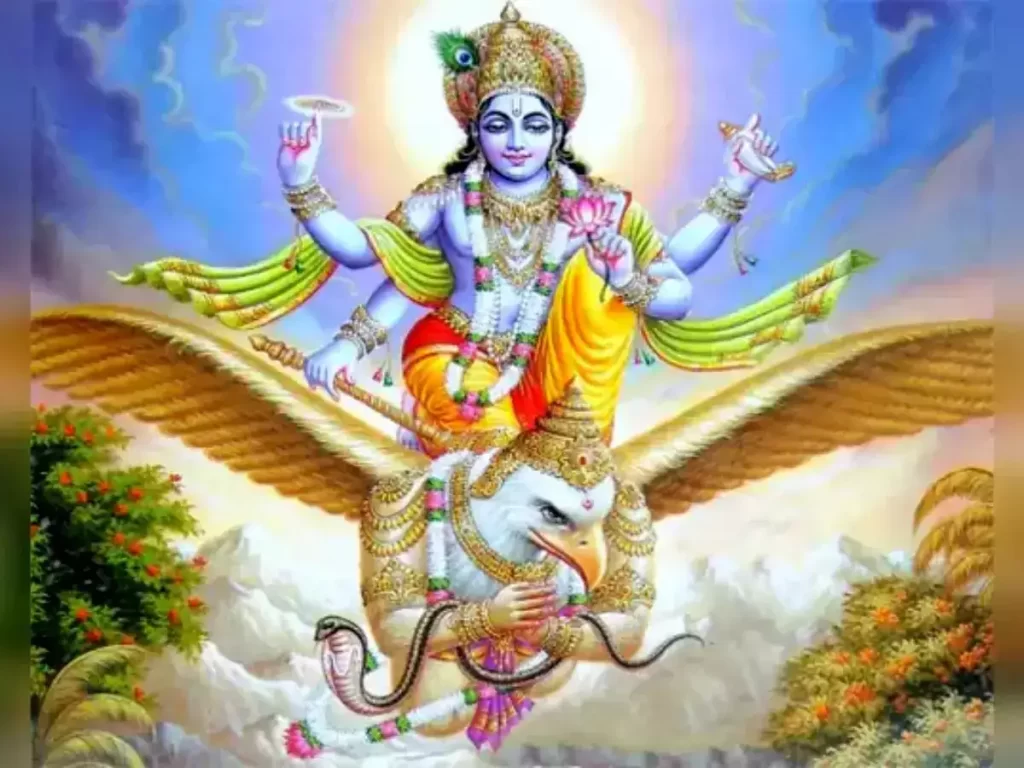
There is a story about Garuda, the Divine Eagle and the Vehicle of Lord Vishnu. He was blessed with liberation (moksha) from the cycle of birth and death in this month. Auspicious festivals like Vasantha Panchami, Ratha Saptami, and Maha Shivaratri fall during the Telugu month of Magha.
Maha Maghi
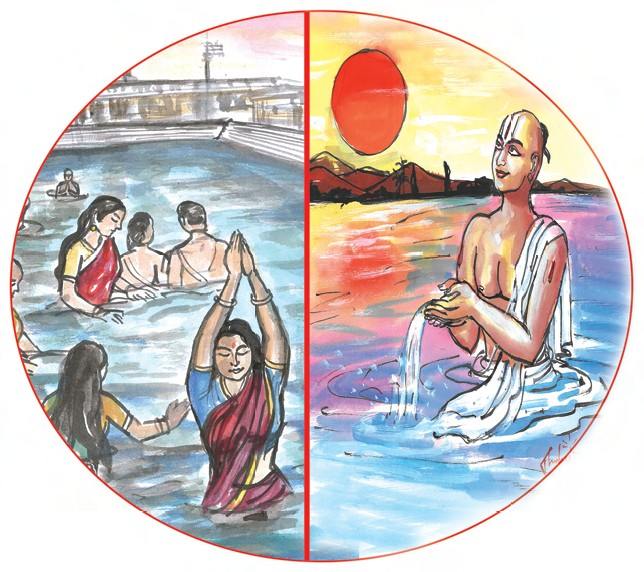
The Purnima Day during Magha Masam is considered very auspicious because the Moon transits from the star Magha with its enchanting brilliance of sixteen hues. The Pournima Day in Magha Masam is also called Maha Maghi, and it is the most auspicious day for taking baths in holy rivers, giving donations, ‘japas’ and recitation of sacred mantras. Brihaspati enters Simha Rasi on this day, and he is worshipped. Jubilant celebrations are conducted in temples during this month.
Magha Puranam
In this month, devotees read the Magha Puranam. The great sage Suta narrated the significance of Magha in the Padma Purana. In the 12th chapter, he explained the importance of taking a bath in Prayaga, Trayambakeswar and the river Godavari. He said that during this month, one should bathe in holy waters in the early morning and pray to Lord Vishnu.
Devotees read the Magha Purana and light lamps in the temples of Lord Vishnu and Lord Shiva.
Slokam
Taking a bath on Purnima Day in sacred waters is regarded as the most significant event, and while taking a bath, one should recite the following sloka.
“Dukha daridra nasaya,
Sri Vishno stroshanaayacha
Pratah snanam Karomyadya
Magha papa vinasanam
Makaraste rave Maghe
Govinda Achyuta Madhava
Snanenanena me deva
yadhokta falado bhava”
I am taking this holy bath in the month of Magha to please Lord Vishnu for removing my sorrows, sin and poverty. Lord Govinda, Lord Achyuta, Lord Madhava, bless me with great benevolence.
Magha Masam and Eternal Values of Marriage
In Hindu tradition, marriage is not viewed as a mere social contract but as a lifelong sacred vow. The Manusmriti describes marriage as a yajna, where husband and wife walk together on the path of righteousness: “Anyonyasyavyabhicharo bhaved amaranantikah” — mutual fidelity between husband and wife should last until death.
Magha Masam symbolises purity, discipline, and spiritual alignment, making it an auspicious time for couples to enter the grihastha ashrama with a strong moral and spiritual foundation.
Ideal Married Life
Our epics present timeless models of ideal married life. The marriage of Sri Rama and Sita Devi in the Ramayana is the supreme example of dharmic companionship. Sri Rama upheld dharma even in the most testing circumstances, while Sita Devi embodied patience, purity, and unwavering faith. During exile, separation, and suffering, their bond remained rooted in righteousness. Valmiki Ramayana repeatedly highlights Sita’s devotion and Rama’s commitment to dharma, teaching that marriage is sustained not by comfort alone but by shared values and sacrifice.
Another powerful yet often understated example is that of Lakshmana and Urmila. While Lakshmana accompanied Rama into exile to serve him selflessly, Urmila stayed behind in the palace, silently bearing separation and loneliness. Scriptures describe her sacrifice as equal to Lakshmana’s tapasya. Her character teaches that marriage also involves unseen sacrifices, emotional strength, and understanding one’s partner’s higher duties. Together, these epic couples show that mutual respect, patience, and purpose form the backbone of a strong marital bond.
The Mahabharata too emphasises the importance of harmony in marriage. Draupadi, despite her immense hardships, stood firmly with the Pandavas, while they, in turn, upheld their responsibilities towards her. The Shanti Parva explains that a household thrives when husband and wife treat each other as equals in dharma: “Dampatyor ekadharmitvam grihasthasya visheshatah” — unity in dharma between husband and wife is the essence of household life.
In contrast to these ideals, modern times are witnessing a growing number of divorces, especially among the youth. Marriage today is often approached with expectations of personal happiness alone, neglecting responsibility, adjustment, and commitment. Small misunderstandings, lack of communication, ego clashes, and unrealistic expectations frequently escalate into major conflicts. Unlike earlier times, patience and perseverance are diminishing, leading couples to choose separation instead of resolution.
Scriptures repeatedly emphasise the importance of forbearance and mutual respect. The Bhagavad Gita teaches balance and emotional maturity: “Samatvam yoga uchyate” — equanimity is yoga. Applying this principle in married life helps couples face challenges calmly without being overwhelmed by anger or frustration. Marriage demands emotional discipline just as much as love.
There are several lessons that today’s youth must understand before entering marriage. First, marriage is a lifelong commitment, not a temporary arrangement. Second, one’s spouse is an individual with different thoughts, habits, and limitations; acceptance is essential. Third, open and respectful communication is vital. Suppressing emotions or avoiding dialogue only weakens the relationship. The Rig Veda beautifully captures marital harmony in the verse: “Samrajni shvashure bhava, samrajni shvashrvam bhava”, blessing the bride to rule the household with wisdom and harmony.
For a healthy married life, certain conscious steps are necessary. Mutual respect must be the foundation of the relationship. Trust should be nurtured, as suspicion destroys emotional security. Patience and forgiveness help overcome inevitable conflicts. Both partners should support each other’s personal and professional growth. Families too play a crucial role; elders should guide with wisdom while avoiding unnecessary interference. The Atharva Veda emphasizes companionship in marriage: “Saha dharmam charatah” — may the couple walk together in righteousness.
Marriages conducted during Magha Masam remind us of these sacred principles. This holy month is not merely about choosing an auspicious muhurta but about embracing the deeper dharma of marriage. When couples internalise the values taught by our scriptures and epics, marriage becomes a journey of growth rather than conflict. By reviving these timeless teachings, society can strengthen family bonds, reduce divorces, and restore the sanctity of marriage. Magha Masam thus stands as a reminder that a marriage rooted in dharma, patience, and mutual respect is the true meaning of kalyanam.