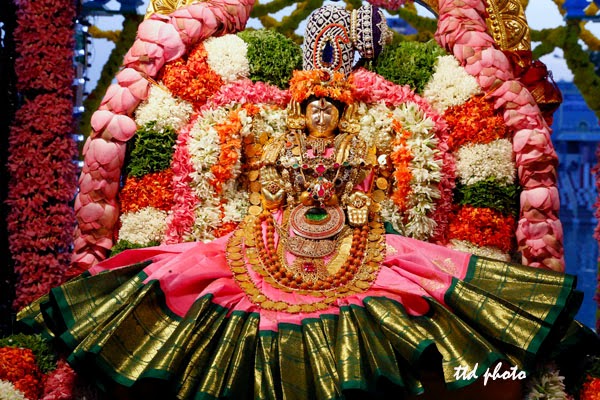
The Significance of Vyuha Lakshmi and Sri Padmavathi in Hinduism
Goddess Saraswati, Goddess Lakshmi and Goddess Parvati are important in keeping the balance of this universe and guiding the creation smoothly. Among them is the Goddess Lakshmi, in the form of Ashtalakshmi, who bestows wealth, luxury, fortune, children, prosperity, courage, valour, and success upon humans. She becomes Mother Nature and constantly gives us luck, happiness and comfort.
Goddess Padmavati, one of the incarnations of Goddess Lakshmi, rules the heart’s throne of the Kaliyuga Lord Srinivasa. She receives the dhoopa (incense), deepa (lamps) and naivedya (offerings) at Tiruchanoor and blesses all the devotees. Because of her distance from her Lord, she is actually said to be “Viraha Lakshmi” (Viraha meaning “the state of experiencing the pain of separation”), but is colloquially referred to as “Veera Lakshmi.”
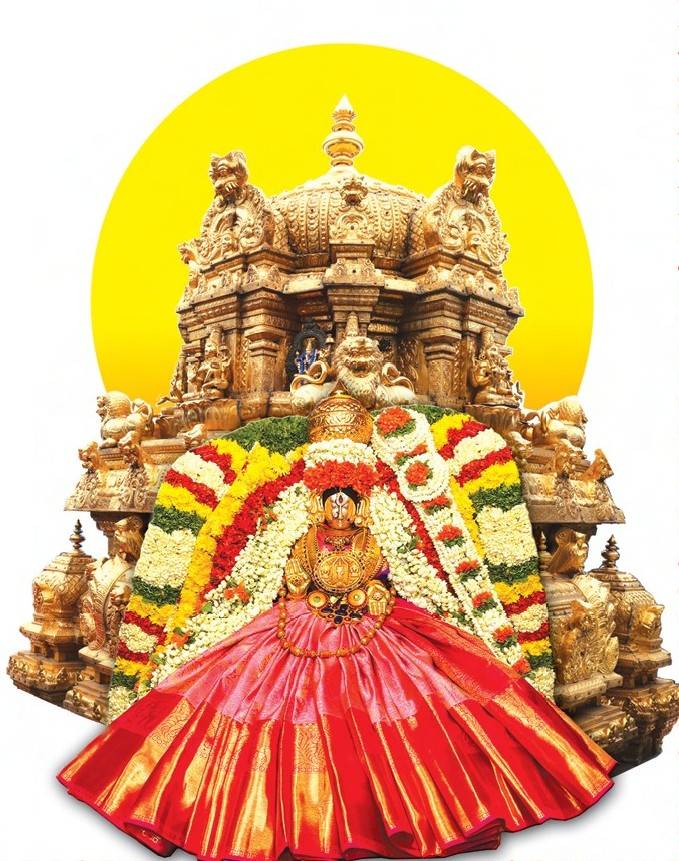
Vyuha Lakshmi
She sits in the heart of Moolavirattu (main idol) Lord Srinivasa in the sanctum sanctorum of the Tirumala Srivari Temple. Usually, Goddess Lakshmi is seen with four hands and a lotus, but Tantra Lakshmi is seen with three hands. That’s why she is called ‘tribhuja’ (a triangle).
This Vyuha Lakshmi is anointed with turmeric on every Friday, and that is why the Swami is also anointed with turmeric on Friday. Vyuhalakshmi is also worshipped as Swarna Lakshmi. Srivaikhanasa Agama says that the Lord Srininvasa is the embodiment of Para, Vyuha, Vibhava, Antaryami and Archa forms. The Vaikhanasa Agama says that those who worship Vyuha Lakshmi in the archa form will get all the good fortune and blessings.
Om Paramalakshmyai, vishnu vakshasthitaayai, aasrita taarakaayai, ramaayai, Namo vahnijaayai namoh namaha!!
This Mantra says that all the victories are achieved just by thinking of Paramalakshmi (Supreme Goddess) in the names of Ashrita Varadaayini, Rama and bhumija who reside in the bosom of Lord Vishnu.
That is why in the blessing done at Tirumala, the speaker is blessed with – vaktajje Bhagya Lakshmihi, Karatarakamale Sarvadaa dhana Lakshmihi, Dordande Veera Lakshmihi, Hrudaya Sarasaje Bhuta Karunya Lakshmihi. That is, the mother, as a compassionate Kalpavalli (divine blessing vine), blesses him and is also blessed by the Swami, so it can be seen that Srinivasa, along with Siri, shines with evergreen light in Anandanilayam.
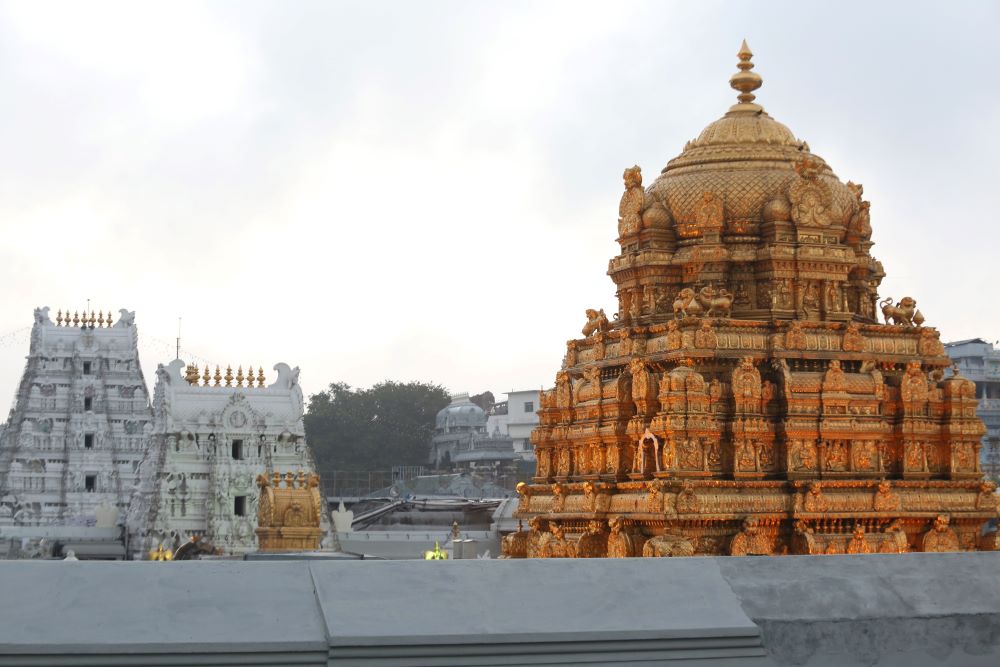
Along with the Swamiji, all the rituals and offerings to the bosom-residing Lakshmi are also held in Tirumala at the same time.
Padmaasane, Padma uroo,
Padmaakshee, Padma sambhave!
Twam maam bhajasva padmaakshee
yenan saukhyam labhaamyaham!!
Padmaasane, Padmavipadmapatre
padmapriye padmadalaayataakshi!
Viswapriye vishnumanonukoole
tatpaadapadmam mayi sannidhidtsva!!
Srisuktha states that Goddess Padmavati, born in Padma, has a Padma-like form and is like the mind of Lord Vishnu. According to the Padma Purana, the Venkatachala Mahatmya, the Varaha Purana, and the Skanda Purana, Bhrigumaharshi strikes the breast of Vishnu where he resides, but unable to digest Vishnu’s forgiveness, Sri Mahalakshmi leaves Vaikuntha and reaches the world.
Sri Mahalakshmi reaches Kolhapur (Maharashtra) first. Thus, the devout Swami of Goddess Lakshmi reaches the earth in search of the Goddess. You can’t find her anywhere. At the same time, Asariravani says that Mahalakshmi will be pleased if he digs a pond on the banks of the Swarnamukhi River and puts lotus flowers in it and practices penance for twelve years.
With this, the Swami digs the existing Pushkarini with the help of a sickle, puts the golden lotus flowers and consecrates them to Sri Suryanarayana Swami to spread the lotus flowers and performs penance for 12 years. On the fifth day of the bright fortnight of the month of Kartik, she was born as Sri Padmavati Devi out of Padma (Lotus).
Tiruchanoor is the place where Sri Padmavathi Ammavaru rested on the Padmasana as per the prayer of Suka Maharshi, who was the Hridayeshwari of Lord Srinivasa.
Brahmotsavams
The Brahmotsavams for Goddess Padmavati are held every year in the month of Kartika. The abode of Suka Maharshi, Tiruchanur, which was once known as Shukapuram, is a place where goddesses Padmavati and Saraswati appear on a swan in the form of a harp.
Hamsa is the symbol of knowledge; Hamsa is the mantra of breath; white clothes are the symbol of purity; the parrot is the symbol of the power of speech, and the magic power of the rosary is seen on the vehicle of Sirulathalli Hamsa on the second evening. Also, Gajavahanam (elephant ride) is very dear to Goddess Padmavathi. Gajam (elephant) symbolising sacrifice and wealth, is a favourite devotee of Lord Vishnu.
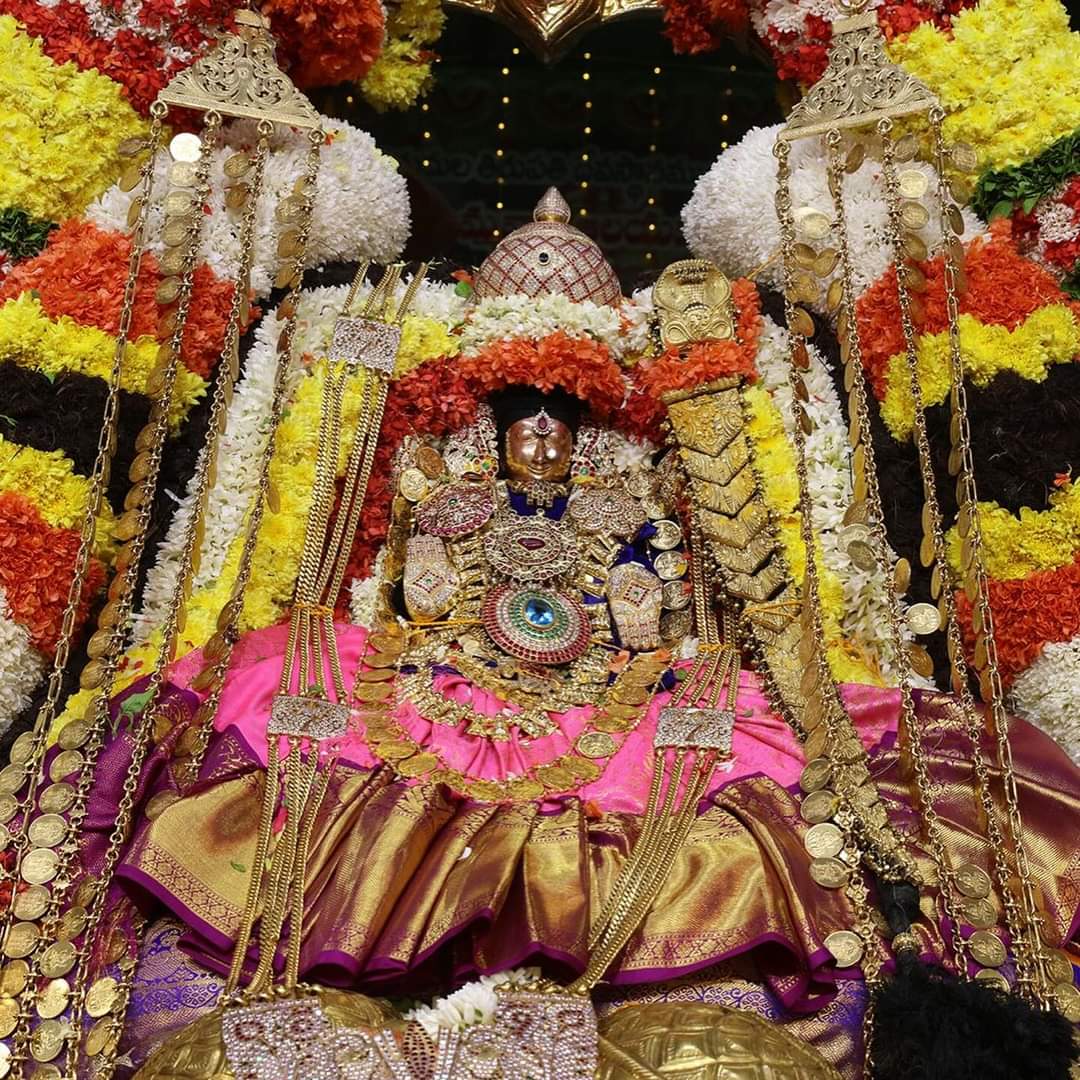
For such a devotee as Gajendra, the Lord himself came down from Vaikuntha and saved him. Goddess Padmavati rides the gajavahana on the fifth day evening and showers the rain of wealth on all the devotees.
Similarly, the Airavata (the white elephant), Kalpavriksha (the divine tree of blessings) and the Chandra (Moon) all that originated from the paalasandram (ocean of milk) along with Goddess Lakshmi, are a part of these grand Brahmotsavas. They become goddess Padmavati’s chariots. We can also find the saint poet Annamayya saying that the Moon is the sibling of Goddess Lakshmi.
Kalpavalli, the abode of such devotees, dwells richly on natural treasures such as Kalpavriksha, Chandraprabha and Muthyapandiri (pearl-chariot). As mentioned in the Lakshmi Ashtottara, she blesses the devotees by roaming on different vehicles for nine days to convey the meaning of the word ‘Prakrutyai namaha’.
Tirumala’s Vyuha Lakshmi here in Tiruchanoor is Padmavati. She is Lord Srinivasa’s Pattapurani (crown princess).