Skip to content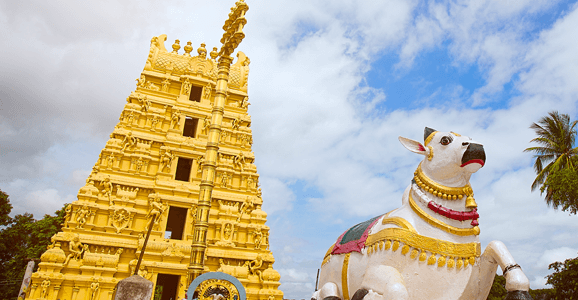
Srisailam is Shiva || Shiva is Srisailam
Sri Bhramaramba Mallikarjuna Swamy Temple
Srisailam temple is one of the most famous and ancient temples in A.P. State located on the Nallamala Hills. This temple is dedicated to Lord Mallikarjuna, a form of Lord Shiva and Maa Bhramaramba, a form of Adi Parasakthi. It is one of the 12 Jyotirlingas and one of the 18 Shakti Peetas of Adi Parasakthi.
Srisaila Mahakshetram is considered Kailasa on Earth. The history and tradition have it that the merits earned by visiting Srisailam are equal to worshipping all the divine powers of the universe.
Srisaila Mahakshetram is the living embodiment of ancient and spiritual-cultural traditions and values. Visited by many great saints like Adi Shankaracharya, rulers mainly Sri Krishna Devaraya, Chatrapathi Sivaji and several other spiritual personalities; Srisailam is the supreme repository of spiritual truth.
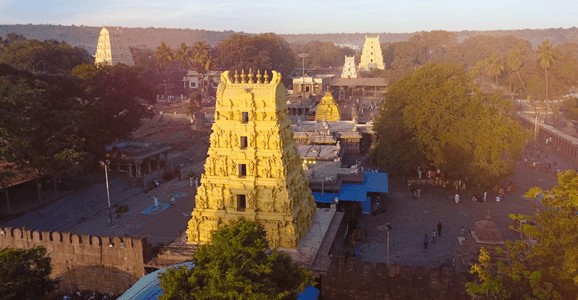
Now, let us have a glance. Many festivals and rituals are being performed in the Srisailam temple.
Among them, there are two Brahmotsavas, namely –
1. Makara Sankranti Brahmotsavam
2. Maha Sivaratri Brahmotsavam
The Makara Sankranti Brahmotsavam is observed with great sanctity for seven glorious days, aligned with the solar transition (Makara Sankramana), marking a new beginning in the Vedic calendar— the Uttarayana. The festival is preceded by the Panchahnika Deeksha, five days of disciplined worship and ritual preparation undertaken by the temple priests and many devotees.
During these spiritually charged days, the entire temple complex transforms into a sacred cosmos. The air vibrates with the resonant recitation of Vedic mantras, especially during the performance of Utsava Pujas, Rudrahoma and Chandihoma, which invoke the blessings of God Siva and Goddess Chandi to ensure the protection, prosperity and spiritual elevation of all beings.
Mahasivaratri Brahmotsavams
The Maha Sivaratri Brahmotsavams, a festival of 11 days, stands as the crown jewel of all celebrations at Srisailam, a spiritually charged festival that embodies the very essence of Sivatatva—timelessness, transformation and transcendence. Celebrated with extraordinary fervour and ritual precision, this eleven-day divine observance is a cosmic festival of performing rituals for the oneness of all, that awakens the soul of every devotee and uplifts every being that steps into the hallowed grounds of the Srisaila Kshetra.
The festival is observed with the sacred Navahnika Diksha, a nine-day ritual vow by priests, devotees and temple functionaries, culminating in the most auspicious night—Maha Sivaratri, the night when God Siva is believed to have manifested as the infinite pillar of light (Lingodbhavam).
Commencement of the Utsavam
The Brahmotsavam begins on a spiritually auspicious morning with the Yagasala Pravesham, wherein the priests enter the sanctified ritual enclosure constructed specifically for Vedic yajnas and homas. The divine atmosphere is set with Vedic chanting, the fragrance of ghee-fed fires and the rhythmic beats of traditional instruments.
In the evening, the sacred flag-hoisting ceremony, known as Dwajarohanam, is performed with grandeur. A specially consecrated flag bearing the divine emblem of Nandi is raised atop the Dwajasthambha, signalling to the celestial beings, sages and the entire universe that the great festival of Siva has commenced in the sacred hills of Srisailam.
Daily Vahana Sevas
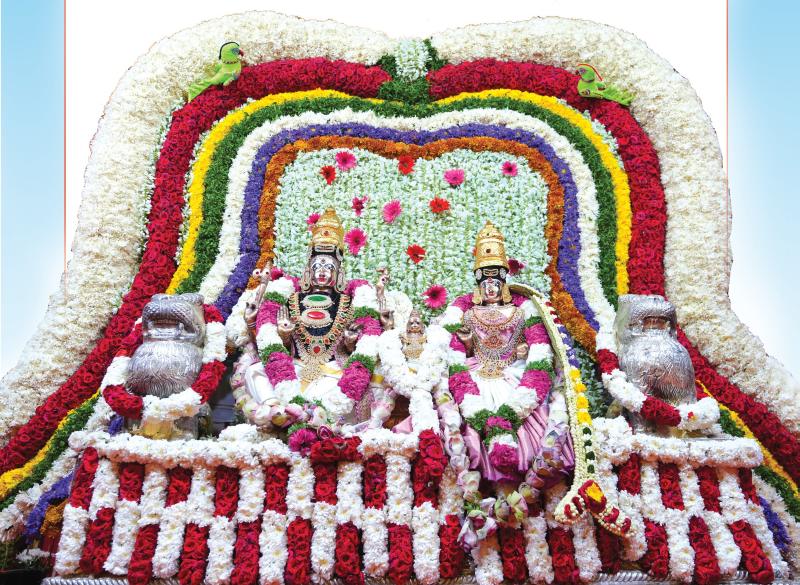
Each day during the Brahmotsavam, Abhishekams, Special Pujas, Rudra Homam, and Chandi Homam are performed, invoking the divine energies for cosmic well-being. In the evenings, the Utsava Murtis—gracefully decorated metaphors of Sri Mallikarjuna Swamy and Sri Bhramaramba Devi— are taken out in magnificent processions on various vahanas, each symbolising divine attributes and cosmic principles.
Official website for Darshanam Bookings
The Significance of Vahana Sevas
- Bhrungi Vahana Seva – Devotion and unwavering loyalty.
- Hamsa Vahana Seva – Discrimination (viveka) and purity.
- Mayura Vahana Seva – Symbolizes the Deity’s power and ability to traverse.
- Ravana Vahana Seva – Epitomizes the devotion and surrender to God.
- Pushpa Pallaki Seva – A floral palanquin symbolizing the divine union between the deity and devotees.
- Nandi Vahana Seva – The divine vehicle of Lord Siva, symbolizing Dharma and steadiness.
- Gaja Vahana Seva – Majestic power and royal authority.
- Ashva Vahana Seva – Dynamic energy, movement and valor.
As these processions wind through the temple streets, devotees throng in thousands, chanting “Om Namah Sivaya”, offering harathi, flowers and heartfelt prayers. The streets of Srisailam echo with devotion, transforming into a divine theatre of cosmic celebration.
Mahasivaratri Night – the Soul’s Ascent to the Infinite
On the night of Maha Sivaratri, the spiritual climax unfolds, the Night of Siva, believed to be the moment when God Siva reveals his infinite form as Lingodbhava, transcending time and space. The evening begins with the Prabhotsavam, a radiant celebration of Radiance divinity, followed the next day by the Rathotsavam (Chariot Festival), wherein the God is carried in a grand chariot pulled by thousands of hands and hearts, symbolising the journey of the soul towards the Supreme.
After Rathotsavam, the revered Teppotsavam (floating festival) is held at the temple pushkarini (sacred tank). The deity, placed on a beautifully decorated float, glides over the still waters amidst chants and music, symbolising the soul’s voyage across the ocean of samsara under the guidance of the Divine. It is believed that the viewing of the floating festival assures health, wealth and removes troubles.
At Lingodbhavakala—the most auspicious midnight hour of Mahasivaratri Day—the Ekadasa Rudrabhishekam with Mahanyasa is performed, invoking the eleven forms of Rudra. The sanctum is bathed in sacred waters, cow milk, curd, honey, ghee, sugar, sandal and vibhuti as the powerful mantras rise into the night sky, dissolving sins and awakening spiritual awareness.
Traditions and Royal Offerings
The tradition of offering Pattu Vastralu (silk clothes) to Sri Mallikarjuna Swamy and Sri Bhramaramba Devi during this period is an age-old custom still preserved. These offerings are made by the Government of Andhra Pradesh, the Tirumala Tirupati Devasthanams (TTD) and several other Devasthanams, signifying royal reverence to the divinities.
Theppotsavam
Adorned with lights, flowers and sacred symbols, the Utsava Murtis of God Mallikarjuna Swamy and Goddess Bhramaramba Devi glide gracefully across the Pushkarini during Theppotsavam. As lamps flicker along the water’s edge and chants fill the air, the sacred float becomes a moving symbol of divine presence, serenity and cosmic blessing.
Procession of Nandi Vahana Seva
As part of the Brahmotsavam festivities at Srisailam, the Nandi Vahana Seva is a grand and spiritually powerful procession in which God Mallikarjuna Swamy, in his Utsava Murti form, is taken in a majestic parade atop Nandi, the sacred bull and his divine vehicle. Nandi symbolises dharma, strength and pure devotion.
The event takes place amidst recitation of Veda Mantras, devotional music and the thunderous chanting of “Harahara Mahadeva!” by thousands of devotees. As the God rides through the temple streets on Nandi, it is believed that he blesses devotees with strength, protection and the fulfilment of righteous desires, making it one of the most revered moments of the festival.
The temple is known not only for its religious importance, but also for its beautiful natural surroundings and rich history. Srisailam temple stands as a symbol of faith, devotion and Indian culture.
Paagaalankarana (Turban Ceremony)
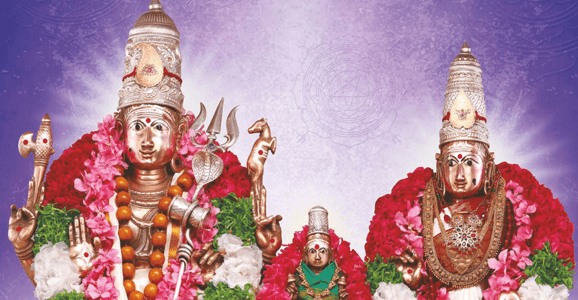
Among the sacred rituals celebrated in Srisailam Sri Bhramaramba Mallikarjuna Swamy Temple, A.P., Paagaalankarana stands out as an exceptionally unique and spiritually profound event. Performed only in Srisailam, distinguishing it from other Saiva temples, the sacred rite is a hallmark of devotion, tradition and symbolic surrender.
As the temple mount of Srisailam resonates with the powerful chant of the Pranava Panchakshari Mantra “Om Namah Shivaya”, the ritual of Lingodbhavam Kala Maha Rudrabhishekam begins in the sanctum sanctorum at around 10 PM, with eleven Veda Pandits and Archakas invoking God Siva through the potent vibrations of the Rudram. This intense abhishekam continues for four to five hours, drawing thousands of devotees into a night-long vigil of prayer and spiritual ecstasy.
In parallel to this, the Paagalankarana ritual commences—an age-old tradition in which the Devanga community (weaver caste) offers a ceremonial turban (Paga) to God Mallikarjuna, symbolizing the honor given to a groom prior to his celestial wedding with Goddess Bhramaramba in the Brahmotsava Kalyanam.
This sacred turban is not an ordinary cloth—it is a 365-arm-length, handwoven white cloth, created meticulously over the course of an entire year by a single Devanga weaver from Hasthinapuram village in Bapatla District. Each day, the weaver offers one “moora” (arm-length) of cloth in devotion, making this ritual not only spiritual but also a testament of daily dedication and craftsmanship.
At the start of the ritual, the long white paga is tied from the Garbhagriha Vimana Sikhara and stretched across the temple roof, encircling the Nandi statues on the Mukha Mandapa, forming a crosswise diamond shape symbolic of a royal crown.
An especially spiritually profound aspect of this ritual is the tradition wherein the chief Devanga devotee performs the offering in a state of ritual nudity—a powerful symbol of purity, humility and complete surrender before the divine. This ancient custom signifies the devotee’s shedding of ego, tradition and identity in service to the Supreme. In deep reverence, the entire temple complex is plunged into complete darkness from 10 pm to midnight. The ceremony unfolds in silence and devotion, enveloped in mystical stillness.
Along with the main Paaga, 25 to 30 other white turbans woven by fellow Devanga families are also offered, adorning the temple like a bridal crown. After the conclusion of the Maha Sivaratri Brahmotsavam, these sacred Pagas are respectfully removed and distributed to devotees as blessed relics, believed to bring divine grace, positive energy and protection.
Throughout the night, devotees engage in Jagaran, staying awake in constant prayer, singing bhajans and meditative vigil. As dawn approaches and the rituals culminate, the temple appears clothed in a radiant white turban, exuding divinity and grace—thus earning this beautiful tradition the name “The Turban Ceremony of Srisailam” — the Paagaalankarana, the only one of its kind.