Mokshada Ekadasi & Guruvayur Ekadasi: Dates, History, and Importance
Fasting at regular intervals improves physical and mental health. This is a well-known formula for maintaining sound health. But when the act of fasting is combined with a religious sanction, it adds strength and discipline.
In Hinduism, Ekadasi fasting has been extolled in religious texts, puranic stories and other local myths as a significant occasion to observe total abstinence from food, chanting the holy names of Sri Mahavishnu, performing bhajans, visiting temples to have darshan of the deity and to keep awake through the night. It bestows on the devotee total rest to the body and soul, so that he can have an opportunity to be nearer the God of his choice. Upavasa, the word for fasting, connotes such an exercise of staying near the Lord.
Hinduism is replete with festivals big, and small through the year which are almost linked to fasting called vratha and for praying. In every month, there are several occasions for fasting like Chathurthi Vratham, Pradosha Vratham, Ekadasi Vratham, Shashti Vratham, Karthigai Vratham, etc., on a particular thithi or nakshatra, seeking the blessings of a particular deity.
Of all the vrathas, Ekadasi, the eleventh day of each Paksha (Sukla and Krishna) in a month, is hailed as the well-established and common day of fasting for all Hindus. There is a puranic story behind the origin of Ekadasi.
Once, an asura called Mura was terrorising the people and devas, when Sri Mahavishnu created a goddess named Ekadasi from his chaithanya, his divine radiance who vanquished the asura. Pleased with her victory Vishnu established Ekadasi Vrat, promising mukti to all his devotees who observe the fasting vratha. Sri Mahavishnu got the name of Murari (slayer of Mura) from this incident and all his devotees commenced observing Ekadasi vrata every month with bhakti and faithfulness.
Ekadasi vratha is celebrated as a day of spiritual awakening, connecting with the divine and also as an exercise to purify the mind, body and soul to attain liberation (moksha) from the cycle of birth and death. Scientifically also such a fasting is recommended as it helps the metabolic process of cleansing and rebuilding the cells of the various organs.
24 Ekadasis
There are twenty-four Ekadasis in a year and occasionally two more. Padma Purana, one of the eighteen puranas, assigns a unique name for each Ekadasi and also a story behind each one of them. Vaikuntha Ekadasi, Kaisika Ekadasi, Nirjala Ekadasi, Papamochani Ekadasi, Putrada Ekadasi, Mohini Ekadasi, and Mokshada Ekadasi are some of the most celebrated Ekadasi vratha days.
Installed by Bruhaspathi & Vayudeva
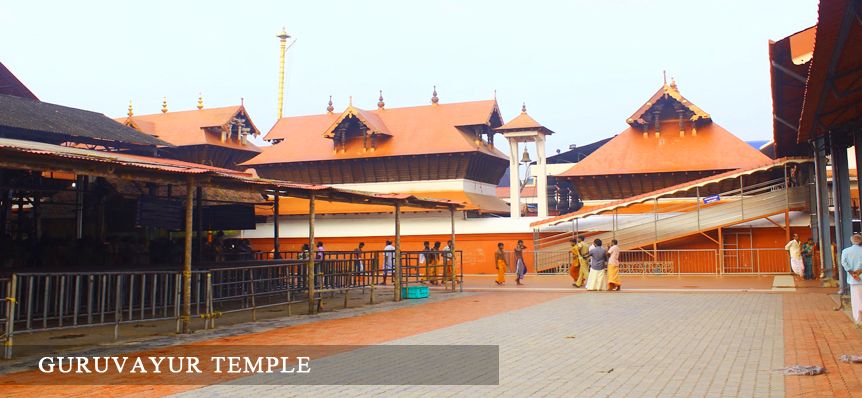
Guruvayur is one of the most venerated Mahavishnu kshetras in India. Along with Tirumala, Srirangam, Thiruvananthapuram, Puri, Badrinath, Dwaraka etc., Guruvayur also attracts thousands of devotees daily. There is a puranic story behind the establishment of the temple of Sri Krishna here. The idol of the deity was originally worshipped in Dwaraka by Lord Krishna Himself and his forefathers in Dwarapa Yuga.
The sacred idol later reached the hands of Bruhaspathi (Guru) and Vayu who chose this kshetra and installed it here and hence the place got the name ‘Guruvayur’ (so it is called Guruvayur). Devotees affectionately adore the deity here as their father and hence Sri Krishna is called ‘Guruvayurappan’. Purana also informs us that Guruvayur Sri Krishna cured King Janamejaya of his skin disease. Devotees from all over India narrate the miracles wrought by Sri Krishna in their lives.
Celebration of Ekadasi
Almost throughout the year the temple of Guruvayur is radiant with festivals and celebrations. A significant festival in the temple is the celebration of a specific Ekadasi which occurs on the Sukla Paksh of Margasirsha (Malayalam month of Vrischikom) month (November- December). This Ekadasi day is well-known in Kerala as Vrischika Sukla Ekadasi.
This Ekadasi day is named Mokshada Ekadasi in Padma Purana, and from the significance it gained in Guruvayur, it is distinguished as ‘Guruvayur Ekadasi’. It is believed that this is the day when Lord Krishna emphasised the significance of Ekadasi fasting to Arjuna.
In the Guruvayur temple, celebrations commence on Navami, the ninth day. Even a month before, special illumination of the whole temple with lamps begins. The Ekadasi day itself is called Vilakku (lamp) Ekadasi.
Remarkably, this Ekadasi occurs duringthe Mandala Season in Kerala. The Mandala period starts on the first day of Vrischikam month (mid-November)and ends on the eleventh day of Dhanur month (late December). The Sannidhi is open for nirmalya dharshan at 3.00 am on Ekadasi day and closes only at 9.00 am the following day (Dwadasi). On Dwadasi, devotees offer a token amount to the temple at the nearby Koothambalam (a traditional hall).
This offering, known as Dwadasi panam, is considered auspicious and an opportunity for devotees to express their devotion to Sri Guruvayurappan.
Remembering the Legendary Elephant Guruvayur Kesavan
One more significant incident associated with Guruvayur Ekadasi is the magnificent elephant called Guruvayur Kesavan, who was loved by all devotees for his tame and elegant behaviour, reached the lotus feet of Baghavan Krishna on this Ekadasi day. There are several wonderful life incidents relating to Kesavan’s service to Lord Krishna.
Nilambur King Valiya Raja in 1922 offered one of his twelve elephants to the Guruvayur temple in fulfilment of his vow. The elephant just aged ten years was named Keshavan. In appreciation of Kesavan’s loyal behaviour, divine service and intelligence, the title of Gajarajan was conferred on him. About eleven feet high massive elephant Gaja Rajan served Sri Guruvayurappan for 54 years. He was glorified as the incarnation of Gajendran, who was released from the deadly grasp of a crocodile by Sri Mahavishnu.
The majestic animal was well-known for his gentle behaviour and strict adherence to all the rituals. The Gajarajan Kesavan breathed his last on December 2, 1976, which happened to be Guruvayur Ekadasi day. Devotees can have darshan of Kesavan as a realistic statue in front of the Srivalsam Rest House near the temple. His tusks are also displayed atop the entrance to the temple. Every year, Guruvayur Kesavan is honoured by devotees and temple authorities.
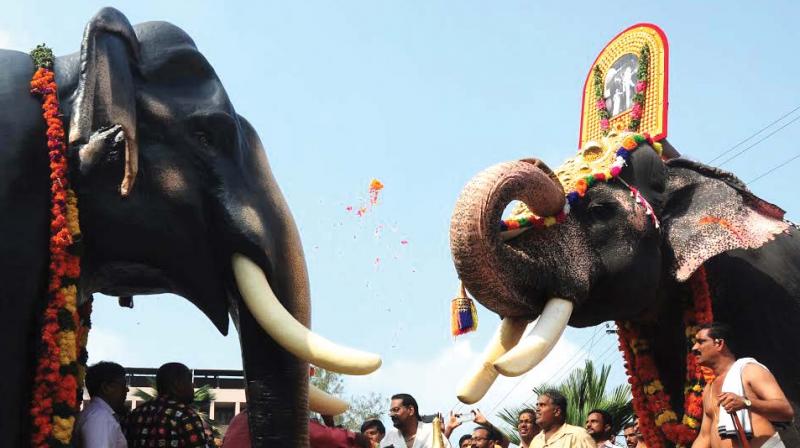
In remembrance of legendary of Kesavan, the statue of the elephant is garlanded and decorated. On this day the leader of the elephants at Punnathur Kotta also called Ana Kotta where more than fifty elephants of Guruvayur temple are maintained, garlands the statue of Kesavan when other elephants stand around and pay homage. This is a wonderful ceremony that devotees visiting Guruvayur on this day enjoy and relish.
Gita Jayanti
Another notable importance of this Guruvayur Ekadasi is that on this same day, Lord Krishna imparted the sacred Bhagavad Gita to Arjuna on the battlefield of Kurukshetra. Hence, this day is universally celebrated as Gita Jayanti. Srimad Bhagavad Gita is hailed as a total guide for the spiritual evolution and self-realisation of mankind. The Gita is a source of solace and strength to every man and woman.
In times of distress and mental confusion, people refer to the teachings of the Gita. It has been a font of inspiration to millions of people around the world. Teachings of the Gita show the right path and help people avoid falling a prey to the four dreadful sins like lust, anger, greed and attachment which are called the ‘’four gateways to hell”.
An additional event on this holy day is a grand procession of elephants to the nearby Sri Parthasarathy swami temple as this day happens to be the Geethopadesam Day or Gita Jayanthi.
In connection with Gita Jayanthi a grand celebration is held every year at Kurukshetra, Haryana. Kurukshetra, the battlefield where the Pandava forces and Kaurava forces were involved in deadly war for eighteen days, is the venue where Sri Krishna delivered the Srimad Bhagavad Gita to Arjuna before the commencement of the war. It is believed that in this holy place Rig Veda and Sama Veda were composed and Manu wrote his Manusmiriti. Since 1989, the Haryana Government has been organising the Gita Festival in Kurukshetra.
From 2016 the Central Government also associated itself in this celebration. In this celebration called Gita Jayanti Samaroh pilgrims from all over India participate to take bath in the holy waters of Brahma Sarovar and Sannihit Sarovar. The weeklong festival includes Baghavatha purana parayana, Bhajans, book exhibitions and other cultural activities.