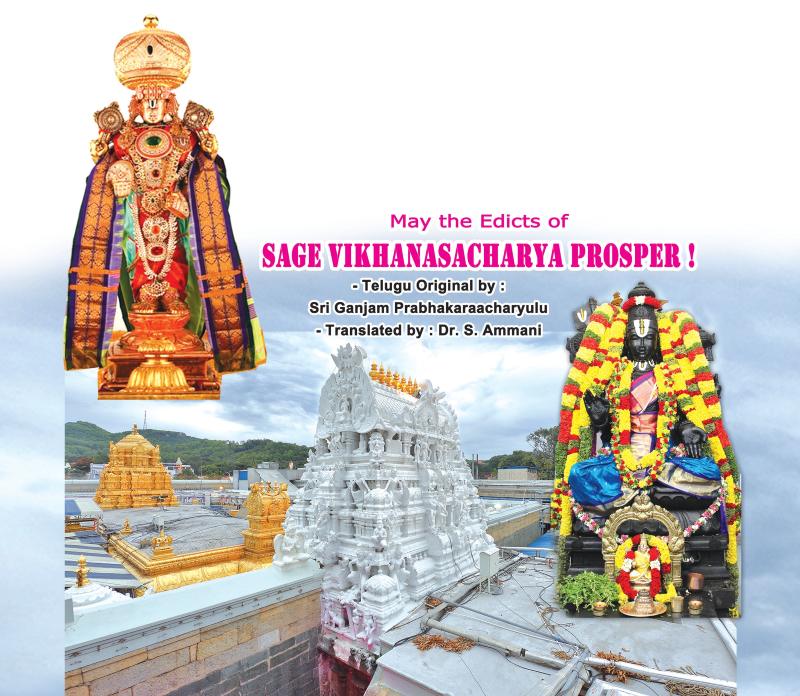
Special Article on Sri Vaikhanasa Jayanthi
The Vedas are the foundation of the traditional Indian culture. The Vedic teachings are the supreme standard for the distinctive and cultured Indian Vedic way of life. Our temples are the visual metaphors of the sublime Vedic knowledge inherited from ancient times.
Sri Vaikhanasa Jayanthi on 09.08.2025
It is no exaggeration to say that, as the abodes of God, they play a great role in providing humanity with a way of life that can achieve Dharma, Artha, Kama and Moksha in that order, with enthusiasm and spiritual awareness. Human beings in the world live in family life. In the process of going through the journey of life, they are under various pressures due to the hardships of samsara. In order to lead a life of peace and harmony by worshipping God with devotion, the temple culture helps a lot.
The Agamas play a major role in the design and construction of temples. Among these Agama Shastras, the one that comprehensively presents the worship of Lord Vishnu is the Sri Vaikhanasa Agama Shastra. Bhagavan Vikhano Munindra, son of the mind of Srimannarayana, is the originator of this Agama.
Swaayambhuva manokaale yugaadou suklavatsare
Sravana sraavane sukla poornima somavaasare
Simhalagnecha samyukthe bhaje naimisha maagatham !
In the beginning of the yuga, on the full moon day with the star of Shravana in the month of Shravana, Monday, the most auspicious day, Sage Vaikhanasa was born assuming the form of God with four hands, discus and conch, tridanda, sacred basil garlands on the banks of Gomati river in Naimisha forest.
Vikhanaa itivai vishnuh tajjaa vaikhaanasa smrutah
Vishnamshajascha vikhanaah muneenaam pradhamo munih
Tenopadishtam yatsootram tatsootreshu uttamam smrutam!
Sage Sri Vikhanasa is an aspect of Sri Maha Vishnu. His descendants are the Vaikhanasas. Sage Vikhano Munidra, a descendant of Vishnu, is the first among the sages. The Vaikhanasa Kalpa Sutra taught by him is unique. Therefore, the use of the Shadvaishnava Mantra, Vishnu Sukta, Purusha Sukta, Paramatmiko Upanishad Mantras, Homa processes, invocation procedures, and the Sri Vaikhanasa Kalpa Sutra, which is the source of Sri Vaikhanasa Bhagavat Shastra, has been established as the most authentic.
Vaikhanasena Sutraena Nishekadi Kriyanvitaih
Brahmanaih Kriyamaanam
Yattat Saumyam Vaidikam Matan.
Vaikhaanasaas who are sanctified by the nisheka and other samskaaraas as per the Kalpasutra written by Sri Vaikhanasa Maharishi. The ritual of worship they undertake has the Vedic sanction. Such worshippers of God are Vaikhanasaas. Such a method of worship has gained fame as a means to fulfil life on this earth and beyond. This Vaikhanasam is defined as a single branch. Before the division of the Vedas, the Veda had a single heap of mantras called Yajuh.
Vedanaam Vyasanaatapurvam pragrupam militanthu
yat taantu Vaikhanasee shaakham iti Veda vido viduh ….
Aukheya – heart of God Brahma
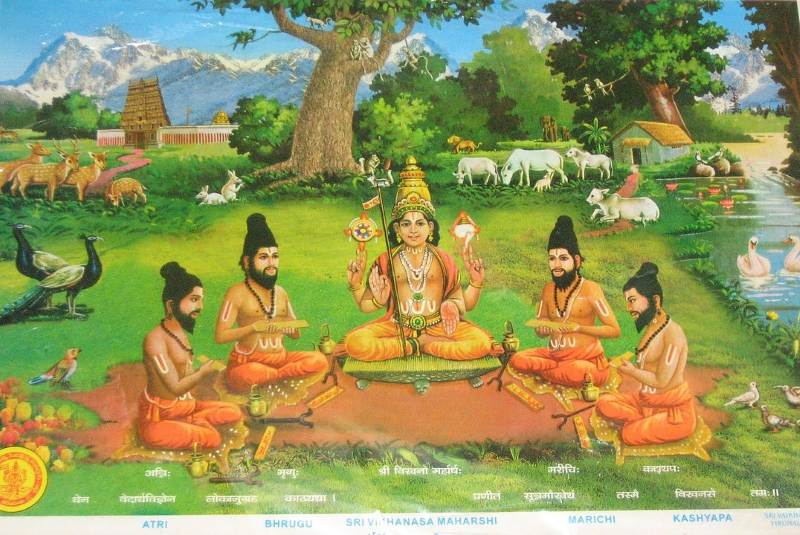
Another name for this Vaikhanasam is ‘Aukheya’. ‘Ukha’ means the heart of God Brahma… The doctrine that emerged and evolved from it is Aukheya. It is seen as the origin of all the doctrines of Samarchana. Sage Vikhanasa accepted Bhrigu, Atri, Marichi and Kashyapa as his disciples and taught them the Vaikhanasa Shastra in the form of a meaningful book of one crore mantras for fulfilment. These four sages, aiming to benefit the world, condensed their teachings into four lakh books for the convenience of all humanity and presented them to the world as Adhikarams, Samhitas, and Kandas.
The books presented by these sages as ‘Sri Vaikhanasa Bhagavat Shastra’ have acquired great distinction in the world and are worshipped in a manner pleasing to all the gods, the twelve zodiac signs, the nine planets, nature, and the five elements, and with the blessings of the respective gods, they are known as the knowledge that helps the peaceful existence of all living beings
Vaikhanasena Vidhina Keshavam Samyagarchayetl
Tadarhanam Priyakaram Vishno Sarvaphalapradam.
This knowledge is acquired through study and provided for the welfare of the world by the Vaikhanasa Archaka system.
Archakasya Harih Sakshat Chararupi Nasamshayah
In addition to the wonderful Seemanta Samskara that gives training to the infant from the mother’s womb, the Samskaras performed on various occasions by scholars as per this system transform the common man into a great person. It prescribes the temple system as ordained by the Vedas, the land survey for the construction of the temple, the temple tower, pavilion, compound wall, vimaana, construction methods, idolmaking style, measurements and postures and images of deities, installations, special festivals held every week, fortnight and year.
In a way that devotion, faith and spiritual consciousness are instilled in all the people. The temple reveals a cultured lifestyle, and righteous behaviour is considered a great training center. It is explained in detail in the texts of the respective sages.
In addition, it defines how to conduct wonderful sacrifices for the peace of the world to alleviate natural disasters, storms, floods, dreadful diseases, etc. it also describes how to construct a village, town, streets, and architectural features (Vaastu) in detail…
Sri Vaikhanasa Kalpa Sutra
Sri Vaikhanasa Kalpa Sutra was written with 32 questions in 4 sections.
- 1. Smarta Sutra 7 questions,
- 2. Dharma Sutra 3 questions,
- 3. Pravara Sutra 1 question,
- 4. Srauta Sutra 21 questions.
A total of 32 questions were presented by Sri Vikhanasa Muni.
Smartha Sutra
This describes the rituals of Nisheka, Ritu Sangamana, Garbhaadaana, Pumsavana, Seemanta, Vishnu Bali, Jaata Karma, Uttaana Namakaranamu, Annaprasana, Pravaasaagamana, Pindavardhana, Chaulopanayana, Parayana, Vrata Bandha, Visarga, Upaakarma, Samaavartana, Paanigrahana, Ashtaadasha shaareera Sanskaras, Pancha Maha Yajnas, Paaka Yajnas, their atonement method, periods, and modes of their practice.
Through this Samskara, the child gets sanctified from the stage of the fetus itself by practising the rituals ordained by the Vedas. He becomes enriched with wisdom by studying the shastras. He becomes a divine being, as is said, “Archakasya Hari Sakshat” (the priest is the visible Hari). He is blessed with the aspect of the divinity and treads the path of the Vedas as a devotee of Narayana, desiring the welfare of the world.
Dharma Sutra
The Brahmachari, the Grihastha, the Vanaprastha, the Sannyasa and their respective dharmas are specially proposed.
Pravara Sutra
The gotra pravaras of the eight great sages, Vishwamitra, Vashishtha, and Jamadagni have been proven.
Srauta Sutra
The methods of performing Haviryagna and Somayagna, their period, results, and the structure of the sacrificial pits are discussed.
Sri Vaikhanasa Kalpa is famous and occupies a prominent position among the divine Kalpa Sutras. Explaining the uniqueness of the sutra, Sri Srinivasa Makhi has established how this sutra has attained supreme excellence, the method of attaining supreme Vaishnavism, and the method of adopting the Vedic path citing ten reasons.
Bhrigu, Atri, Marichi, Kashyapa, Maharshis have taught in their respective Samhitas that only the preceptor who is sanctified by the eighteen samskaaraas prescribed Sage Vikhano in his Sri Vaikhanasa Kalpa Sutra will be eligible to worship in the temples as per the shastra ordained by Vikhanasa and for the installation of deities, conduct of utsavas, snapanam, atonement process, etc. in the temples
Tirumala Srinivasa: Vaikhanasa Bhagavata Shastra
Sri Venkateswara, the leader of the entire universe who has made Tirumala His abode, has been worshipped as per the Vaikhaansa shaastra for ages. All the devotees who visit Him are fortunate to be blessed with His absolute grace.
Kanyaamaasam gatau bhaane dwiteeyaayaam
jagatpate Dhwajaarohana maadaaya
saankuraarpana mevacha Vaikhaanasaih muni
shreshthaih poojaamantrai prakalpitaa!
As per the puranas, Lord Brahma conducted a nine-day Brahmotsava starting with the Ankuraarpana, by inviting sages like Vaikhanasa and others. Ever since, these Brahmotsavas have been conducted without any interruption as per the Vaikhanasa shaastra generations together as a sacrifice for the Lord. Worship of the five beraas of deities with fire-sacrifices is conducted beginning with the invitation Garuda extends to all the angels.
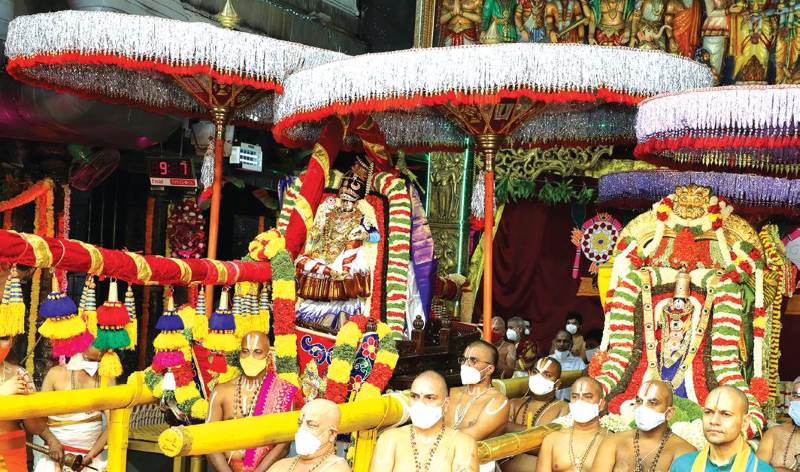
Besides daily worship of the Lord, different utsavaas are conducted from the Kalyanotsavam to the Ekanta Seva, different Arjitha sevas, the annual Teppotsavam, Vasantotsavam, Jyeshtaabhishekam, Pavitrotsavam, annual Brahmotsavam, Pushpayagam on a grand scale as per the shastra.
In the daily worship of the Lord three times, the Lord is praised as “Om Sri Vaikhanasa Muni Shreshtha Pujitaya Sri Venkatesaya Namah, Sri Vaikhanasa Makha Rambhaya Namah”. It reveals the love of Lord Venkateswara for the Vaikhanasa mode of worship. We feel the great power and grace of God in the form of a deity right before us. We experience the glory of the Lord’s spiritual world authentically.
The following verses show that during the Treta Yuga, the righteous Lord Rama, took the vow of exile as per the Vaikhanasa method while going to the forest. As promised to his parents, he took grihastaashrama after completing his vanavaasa, obtained Lava and Kusha as sons. It seems the Vaikhanasa tradition was recognized as unique during the period of Lord Rama Himself.
Asho bhetam rishi samau bhratarau Rama Lakshmanau
Tato Vaikhanasam margama sthitah saha Lakshmana
Vratamadishtavan Ramah sahaayam guhamabraveet
– Vaalmiki Ramayana, Ayodhya Kanda 52 Vaa. Sa. (Verses 71,72.0)
Mention of Vaikhanasa in the Mahabharata
Santi Parva, Moksha Dharma Parva… Bhishma’s explanation of Vaikhanas and Valakhilyas to Dharmaraja:
Rishinam Ugra Tapasam Dharma Naipuna Darshanam
Anye Chapari Cheyascha Brahmana Vanamashritah
Vaikhanasaah Vala Khilyah Saikatashcha Tathapare.l l
– Mahabharatam Moksha Parva. 244 (Verses 19,20.)
In the Mahabharata Shanti Parva, Moksha Dharma Parva, it is known that Vaikhanas and Valakhilyas were among the sages who took refuge in the forests and were a branch of Brahmins who practised penance for the welfare of society. This vindicates the ancientness of the concepts of Vaikhanas and their concern for social welfare.
Araayikaane Vikate Girim Gaccha Sadanve
Shirimbitasya Satvabhih Tvebhishtaa Chetayaamasi.
– Rigveda..
All devotees accept Tirumala with a sense of surrender. Whether they are common people, saints, officials, non-officials, or emperors like Sri Krishna Devaraya Tirumala, at least once in their lifetime, visit Lord Venkateswara, who adorns the Varaha shrine, to get rid of undesirable things and get their desires fulfilled.
Considering it a boon, lakhs of devotees offer tonsure and serve the Lord with their children, fulfil their vows and get back with a desire to visit again. It has become a regular tradition practised by the devotees since the past till now.