Saakshaatkaara Vaibhavotsavam at Srinivasa Mangapuram Temple
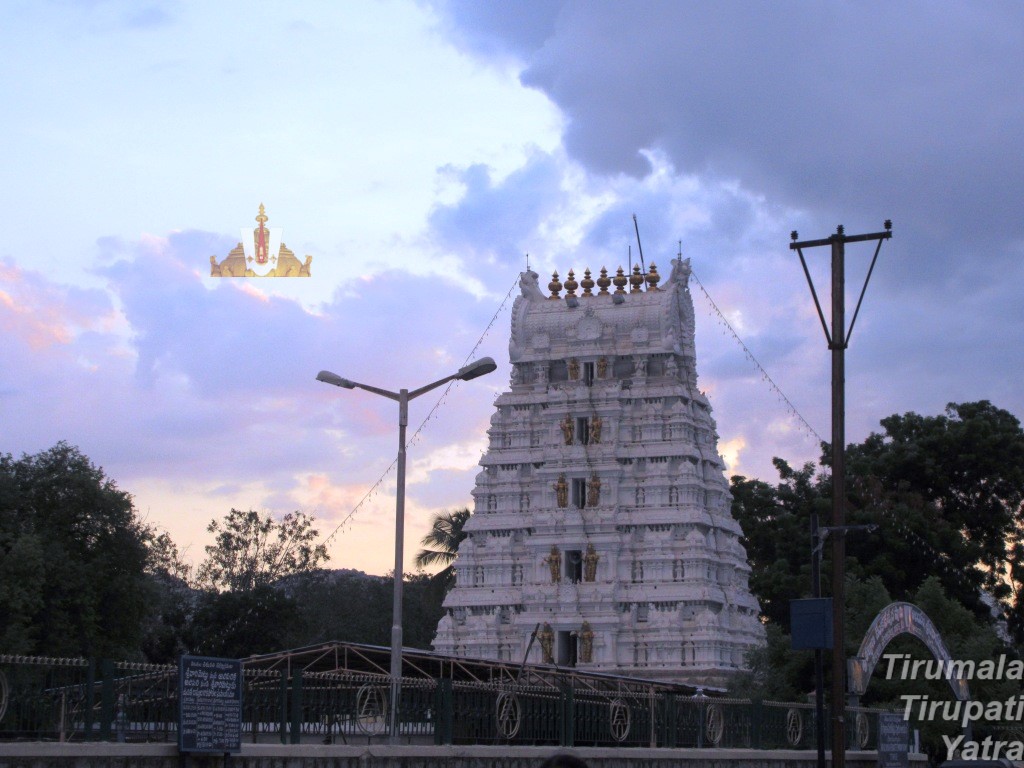
Sri Srinivasa Swamy, who is famous as ‘Sri Kalyana Venkateswara’ in Srinivasa Mangapuram, shines in the sanctum sanctorum in a beautiful eight-foot-tall form. The temple is built in a spacious courtyard of two acres and faces east with a gaaligopuram, pachanaalayam, kalyaanamandapam, yaagamandapam, and a dhwajastambam.
This year Saakshaatkaara Vaibhavotsavam at Srinivasa Mangapuram temple will be conducted from June 30 to July 2nd
The temple of Garutmanta has a mahaamandapam, dwarapalakaas (gatekeepers), aasthan mandapam (the lord’s courtyard), shayanamandapam (the lord’s sleeping sanctum), aardhamandapam (the lord’s place of worship), garbhagriha (main sanctum sanctorum of the presiding lord), and a 25-foot high vimana shikhara have been artistically built with great sanctity.
Although historians are unable to determine the exact date of the construction of this temple, the inscriptions by the Tallapaka dynasty indicate that it was built about 600 years ago. There is no doubt that the temple developed day by day after the Lord appeared to the Archakaswamy in a dream during a period when there was no worship and no worship services for a long time, without the presence of devotees.
It is true that the Tirumala Tirupati Devasthanams took over this temple in 1967 and are leading the temple on a path of development by organising many services, accommodation for devotees and providing many other services.
Mangapura Niwaasaaya
Srinivasayate Namaha
Sri Kalyana Venkateswara
The Venkatachalamahatmya states that Srimannarayana married Sri Padmavati Devi in Narayanavanam to remain as the Archamurthy in this Kaliyuga. Before going to Tirumala, he came to the ashram of Agastya Muni and stayed there for six months, on his orders. Therefore, Swamy became famous as ‘Sri Kalyana Venkateswara’ and that place was named Srinivasa Mangapuram – ‘Shanmaasaavadhi Lakshmeso dekshitoham mahamate’.
This temple is a symbol of the stages of creation
The form in the sanctum sanctorum of Sri Kalyana Venkateswara Swamy is ‘Sthaanakamurthy’, meaning the standing form. On the north side of the artha-mandapam is Sri Ranganatha Swamy ‘Shayanamurthy’, meaning sleeping form. On the south side is Sri Lakshmi Narayana Murthy’s ‘Asanamurthy’, meaning sitting form.
These three forms are ‘Sthanaka-Asana- Shayana’. The VaikhaanaSaagama teaches that these three forms are the symbols of Srusti (Creation) – sthiti (Status quo) – Laya (salvation/end). This is the speciality of this temple.
Realisation (Sakshatkaram)
Despite its historic architectural marvels, it is believed that this temple was invaded by enemies and fell into ruins for some time. It is in a deplorable state without any shrines. This temple is a place for snakebites. Birds chirp in the gopuram, and the temple is pitch dark. It is said that it was a place for cattle, and trees grew thickly, creating a terrifying atmosphere.
It is said that the Lord appeared in a dream to Sri Sundararaja Swamy, a resident of Kanchi, who wanted to rebuild his residence, and after giving him suitable instructions, he disappeared.
He immediately came here, brought the elders and devotees, cleaned the temple, performed a short Samprokshana (cleansing ritual), anointed the Lord, dressed him in white clothes and adorned him with garlands of flowers, and then performed sahasranaamaarchana (praise of the Lord with 1000 names) as per the aagmasaastra and then led a procession in presence of devotees.
This was all done on the auspicious day, 11-07-1940, in the Vikrama year, on Ashada Shuddha Saptami in the Uttara Phalguni Nakshatra. After that very day, the offerings to the Lord began to be held in great splendour day by day.
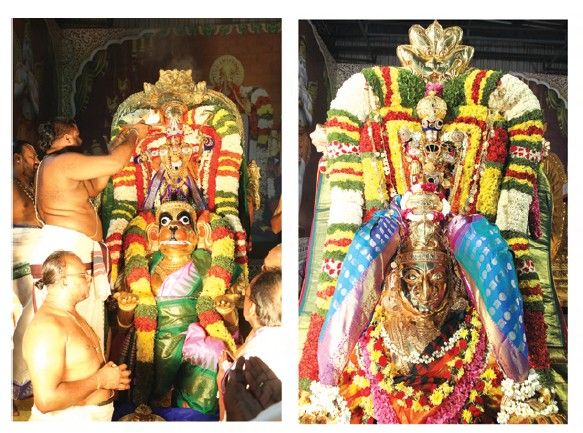
This Vaibhavotsavam, as per tradition, used to be held for only one day until 1980. After that, it is celebrated for three days with the name of ‘Saakshaatkaara Vaibhavotsavam’ (the day of appearance) with Snapana Thirumanjanam, special rituals, decorations, Unjal Seva, Veda Paaraayanam (recital of Vedas), Bhajan Seva and other programs;
- ‘Thiruchi Utsavam’ on the first day,
- ‘Hanumantha Vahanam’ on the second day in the evening, and
- ‘Garuda Vahanam’ on the third day in the evening
are being organised with great happiness and joy.
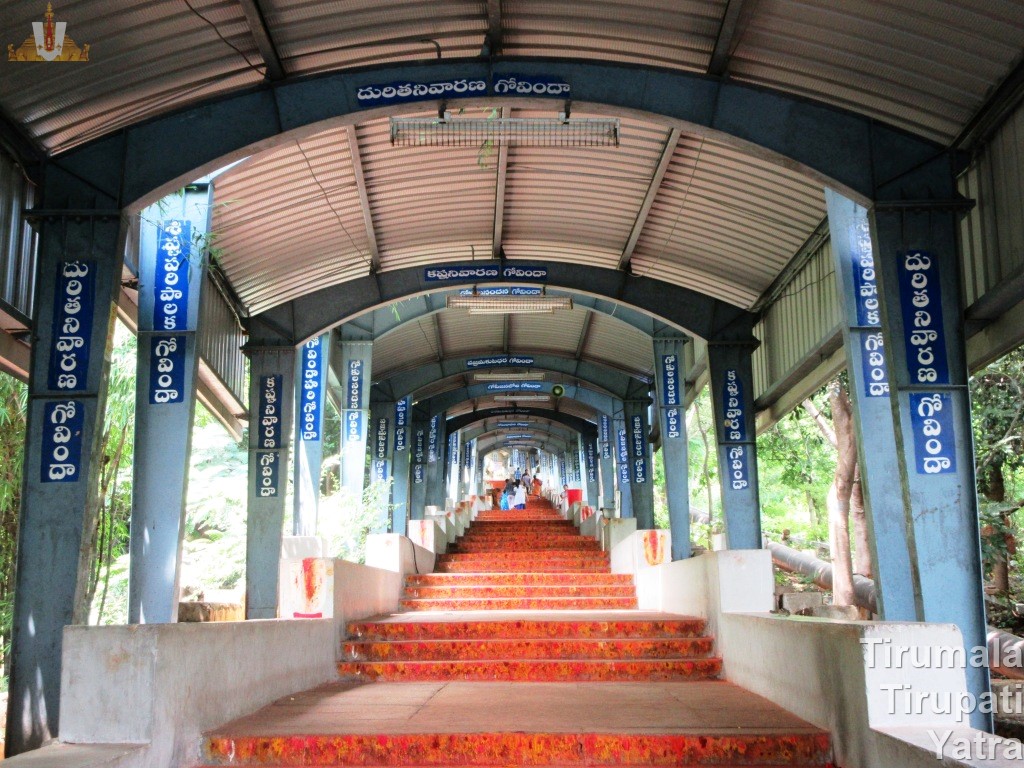
We get to know from the inscriptions of Krishnadevaraya that Srinivasamangapuram has been the house for thousands of vedavidwaans and used to host the sacred yagna rituals with great devotion. For the pilgrims wishing to reach Tirumala, Srivaari mettu, the place close to Srinivasa Mangapuram, is considered the second sacred ‘Step Path’. It is a tradition for pilgrims to visit Sri Kalyana Venkateswara Temple in Srinivasa Mangapuram and then walk to Tirumala via the Step Path.
The dhwajastamba (flagpole and altars), which are being worshipped as a symbol of devotion in the divine presence of Lord Kalyana Venkateswara Swamy, are covered with gold shields and adorned with a golden amulet by the Tirumala Tirupati Devasthanams in the year 2000.
It is an eternal truth that this ‘Saakshaatkaara Vaibhavotsavam’, which is held as a celebration of the liberation of the Vaikhanasaagama, is the Lord realised in the hearts of the devotees and is blessing everyone.
Final Word
Let us all be present at the Sri Kalyana Venkateswara Swamy Saakshaatkaara Vaibhavotsavam, which will be held from June 30 to July 2nd this year to seek the blessings of the birth of the beloved, the one who delights the heart and become the recipients of Sri Kalyana Venkateswara’s grace